Jalna Police Uncover Nationwide Fake License Racket Exploiting Leaked Government Data
In a significant cybersecurity breakthrough, the Jalna traffic police have exposed a sophisticated nationwide racket involving fraudulent websites that illegally exploited previously leaked government data to provide services to citizens. The investigation, which began with a fake learning license scheme, has revealed a much broader network of criminal activity spanning multiple states.
Technical Mastermind Arrested in February
The case first came to light on November 26, 2025, when Abhijit Kaduba Bavaskar, assistant motor vehicle inspector at the Jalna Regional Transport Office (RTO), filed a formal complaint. This led to the arrest in February of Amar Shiv Bharti, a 25-year-old private-sector employee from Guwahati, who police believe served as the technical mastermind behind the operation.
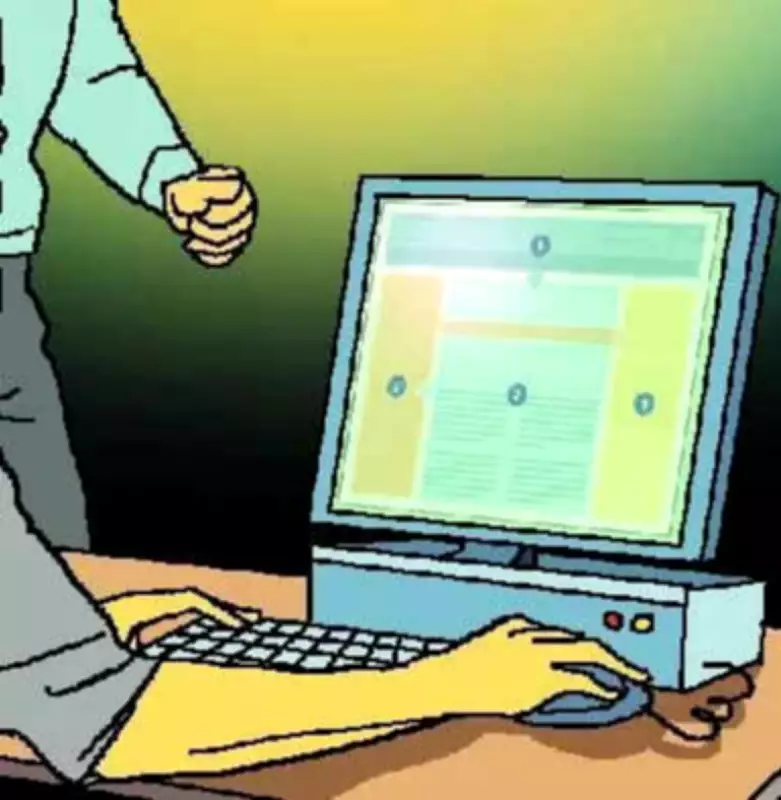
Bharti's racket cleverly circumvented mandatory online examinations and one-time password (OTP) verification systems, creating a streamlined but illegal pathway for obtaining learning driving licenses.

Wider Network of Fraudulent Portals Uncovered
As investigators dug deeper, they discovered this was not an isolated operation. Police uncovered multiple fraudulent websites operating across different Indian states, all designed to resemble legitimate government portals to deceive users seeking quick and inexpensive access to official services.
"The accused serviced more than 6,200 people through these fake portals," revealed an officer involved in the investigation. "These websites were specifically crafted to mimic authentic government platforms, effectively luring citizens who were looking for expedited services."
Extensive Data Breach Details Revealed
Jalna Superintendent of Police Ajaykumar Bansal provided alarming details about the scope of the data breach. "During our probe, we found that the circulated data included sensitive information related to Aadhaar cards, PAN cards, ration cards, LPG connections, vehicle records from RTOs, e-challan information, and learning driving licenses," Bansal stated.
Importantly, police clarified that these fake websites were not directly connected to government servers. Instead, they were exploiting data that had been previously breached and circulated through various channels. This leaked information was allegedly monetized by offering services like learning driving licenses and other official documents in exchange for payment.
Comprehensive Report Submitted to Authorities
Based on their extensive findings, the Jalna police have submitted a detailed report to the Director General of Police (DGP), requesting further action. Additional Superintendent of Police Ayush Nopani explained, "Our investigation has confirmed that government-related data was being circulated and misused through several fake websites. We have prepared a comprehensive report identifying the specific departments whose data appears to have been compromised and submitted it to the DGP."
Sources indicate the report will now be forwarded to State Police Chief Sadanand Date through Additional DGP (Law and Order) Nikhil Gupta. A senior officer from the DGP office confirmed, "The DGP office will formally write to all concerned departments and agencies so they can thoroughly examine the breach's scope and implement measures to prevent further misuse of such sensitive data."
Multiple Arrests and Notices Issued
Law enforcement has already taken significant action against those involved in the racket. So far, five individuals from different parts of the country have been arrested in connection with the case. Additionally, notices have been issued to nine companies based in Delhi, Noida, Gurugram, Jaipur, and Surat regarding their involvement in hosting and operating these fraudulent portals.
Among the key accused is Ajay Setia of Gurugram, Haryana, who allegedly earned approximately 14 crore rupees by selling illegally obtained data. Setia is currently lodged in district jail under court order as the investigation continues to unfold.
This case highlights growing concerns about data security and the sophisticated methods criminals employ to exploit leaked government information for financial gain across India.