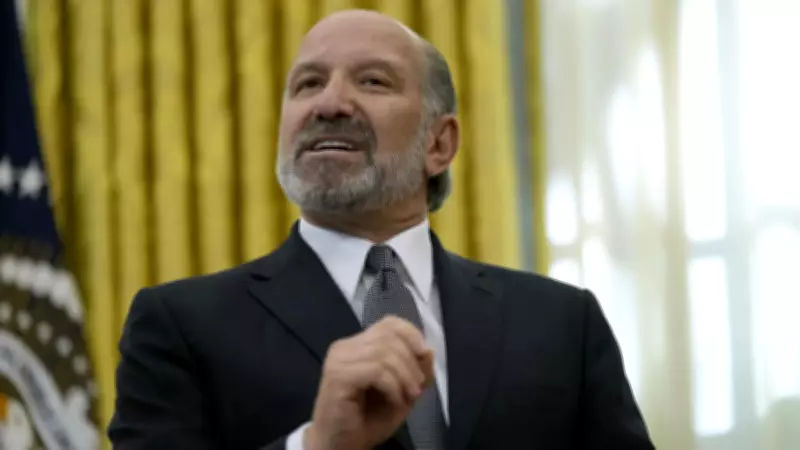
US Commerce Secretary Howard Lutnick has revealed that Nvidia's high-powered H200 AI chips have not been sold to China yet despite receiving approval from the Trump administration earlier this year. He pointed to the diplomatic and economic stalemate as the reason behind the delay.
China's Focus on Boosting Domestic Industry
According to a report by Reuters, the biggest hurdle is coming from Beijing, not the US. The US had feared that these specialised chips would be used to boost the Chinese military. However, Lutnick stated that the Chinese government is actually blocking its own companies from purchasing the H200 chips because it wants local tech companies to invest in and use homegrown alternatives, such as those made by the heavily sanctioned tech giant Huawei.
"The Chinese central government has not let them, as of yet, buy the chips, because they're trying to keep their investment focused on their own domestic industry," Lutnick told a Senate hearing, adding, "We have not sold them chips as of yet."

Initial Block on H200 Sales
Initially, the sale of the H200 chips was a point of heavy debate. The Trump administration argued that allowing these sales would actually help the US by making Chinese companies dependent on American technology, rather than giving them a reason to build their own. However, some Chinese policymakers are reportedly relieved by the delay.
The delay comes at a sensitive time for US-China trade relations. Lutnick also touched upon a regulation known as the "affiliates rule," which would restrict US tech exports to thousands of Chinese companies. While Lutnick called the rule "smart," he suggested it is currently being used as a bargaining chip in broader trade negotiations led by President Trump, Treasury Secretary Scott Bessent, and Trade Representative Jamieson Greer.
Implications for Nvidia
After an extended delay in selling its H200 processors into the world's second-largest economy, Nvidia CEO Jensen Huang said last month that the chipmaker is gearing up to provide some customers with its powerful chips. "We have received purchase orders, and we're in the process of restarting our manufacturing. That's new news for all of you, and it's different than it was two weeks ago or three weeks ago, but that's our condition today ... and our supply chain is getting fired up," Huang told reporters at the company's GTC conference in San Jose, California.
This development underscores the complexities of US-China technology trade and the strategic decisions being made by both governments and corporations.