SpaceX CEO Elon Musk Joins JPMorgan Event, Discusses IPO and Memory Chip Crisis
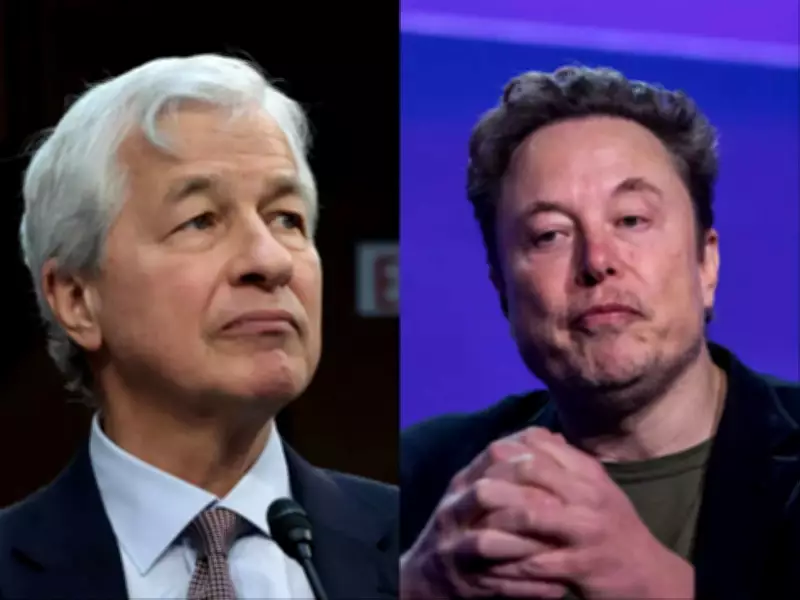
SpaceX CEO Elon Musk recently participated virtually in an event hosted by JPMorgan CEO Jamie Dimon at the bank's New York office. The conversation, shared on social media platform X, covered a wide range of topics including SpaceX's financial trajectory, ambitious plans for lunar AI data centers, and a looming semiconductor crisis in the United States. Musk confirmed SpaceX's decision to go public, but stressed that the lack of domestic high-volume computer memory manufacturing poses a far greater threat to America's technological future.
No Domestic Production of Memory Chips
During the discussion, Musk stated that the US currently produces zero high-volume computer memory chips, a vulnerability he described as 'catastrophic.' He revealed that Micron's Idaho facility will not reach volume production until 2028, while another plant in New York is expected around 2029-30. Even then, output will represent only a fraction of what is required to meet the exponential demand of AI systems. 'There's not a single high-volume computer memory fab in America right now. Zero,' Musk said, underscoring the urgency of the situation.
According to Musk, the crisis is intensified by the insatiable appetite for data from AI and robotics, with required bandwidth and memory capacity far beyond human needs. He explained that while humans operate a few hundred bits per second, computers can demand trillions, making memory infrastructure the backbone of future innovation.

Terafab Project and National Security
To address this shortfall, Musk is aggressively building the Terafab project, which aims to scale memory production to levels capable of supporting orbital AI data centers and next-generation Starlink satellites. He positioned Terafab as essential not just for SpaceX's ambitions but for America's national competitiveness in the AI era. Musk tied the crisis to broader national security concerns, highlighting SpaceX's Starshield division as a vital communications backbone for US intelligence and defense. Without domestic memory fabs, he warned, America risks dependency on foreign suppliers for critical infrastructure.
SpaceX to Go Public
Apart from the lingering crisis, Musk confirmed that SpaceX, which has been cash-flow positive since 2014–15, will finally go public. He explained that past private equity rounds were not fundraising but liquidity events for employees and investors. The IPO is driven by an upcoming capital-intensive phase, including plans to deploy over 100,000 next-generation communication satellites and orbital AI data centers.
Additionally, Musk outlined his plans for AI data centers on the Moon, leveraging low gravity and electromagnetic rail guns to launch compute modules into deep space. He argued that space-based infrastructure solves terrestrial resistance to power plants, enabling solar-powered 'star energy' far beyond Earth's limitations. The Moon, he said, could scale to 1,000 terawatts annually, while Mars remains the long-term terraforming goal.