Visakhapatnam Cyber Fraud: Rs 12 Crore Lost in January 2026
Residents of Visakhapatnam, commonly known as Vizag, suffered staggering financial losses exceeding Rs 12 crore due to cyber fraud in the month of January 2026. As technology advances, scammers are continuously devising new and sophisticated methods to deceive and swindle unsuspecting individuals.
Alarming Statistics and FIR Registrations
In the first month of 2026, the cybercrime police station in Vizag city registered as many as 22 First Information Reports (FIRs), which stemmed from more than 100 individual complaints. Police officials clarified that the discrepancy between the number of complaints and FIRs arises because each FIR typically consolidates 5 to 10 similar cybercrime complaints into a single case for efficient investigation.
Breakdown of Major Cyber Fraud Categories
Among the 22 registered FIRs, five were linked to digital arrest frauds, resulting in victims losing over Rs 3.4 crore. Six FIRs were associated with online trading or investment scams, where city residents were defrauded of approximately Rs 6.2 crore. Additionally, four FIRs pertained to APK frauds, causing losses around Rs 1 crore. The remaining FIRs covered various other schemes, including job frauds, credit card offer scams, and online shopping offer scams.

Vulnerable Targets and Modus Operandi
Despite extensive publicity and awareness campaigns, many people continue to fall victim to digital arrest or bank-related frauds. In a recent high-profile case, a 76-year-old man from Vizag was cheated of Rs 90 lakh by cybercriminals impersonating Supreme Court authorities. The fraudsters falsely accused him of involvement in unlawful activities and claimed a petition had been filed against him in the apex court, exploiting his fear and lack of digital literacy.
In digital arrest or banking-related frauds, cybercriminals often use video phone calls to intimidate victims with threats of arrest, creating a sense of urgency and panic. Senior citizens are particularly susceptible due to their trusting nature, limited digital awareness, loneliness (as their children often reside in other cities or abroad), financial stability, and lack of immediate support, according to a senior police officer.
Investment Scams and Recovery Efforts
Conversely, investment or online trading frauds lure victims with false promises of high returns through various online trading schemes, frequently promoted via social media platforms. Police emphasize that if victims report such crimes promptly within one hour, the lost funds can be frozen immediately. This swift action enables legal proceedings to recover and return the money to the victims. Authorities urge the public to seek immediate assistance by calling the dedicated 1930 helpline, specifically designed for reporting cyber financial fraud.
Key Insights and Preventive Measures
Demographics of Victims: Approximately 60% of cyber fraud victims are youngsters and employees of various firms, highlighting that even tech-savvy individuals are not immune.
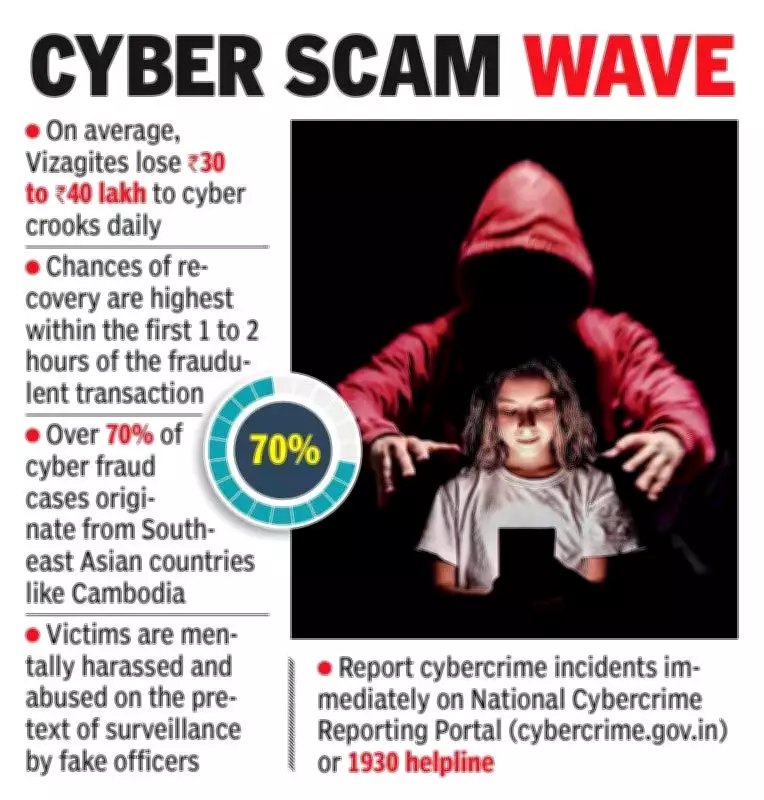
Daily Losses: On average, Vizagites lose Rs 30 to Rs 40 lakh daily to cybercriminals, underscoring the persistent and severe nature of this threat.
Recovery Window: The chances of recovering lost funds are highest within the first 1 to 2 hours after the fraudulent transaction occurs, making timely reporting crucial.
Geographic Origins: Over 70% of cyber fraud cases originate from south-east Asian countries like Cambodia, indicating international criminal networks at play.
Psychological Impact: Victims often face mental harassment and abuse under the pretext of surveillance by fake officers, adding emotional distress to financial loss.
To combat this growing menace, authorities strongly advise reporting cybercrime incidents immediately through the National Cybercrime Reporting Portal (cybercrime.gov.in) or the 1930 helpline. Public vigilance and prompt action are essential in mitigating risks and safeguarding against these evolving cyber threats.