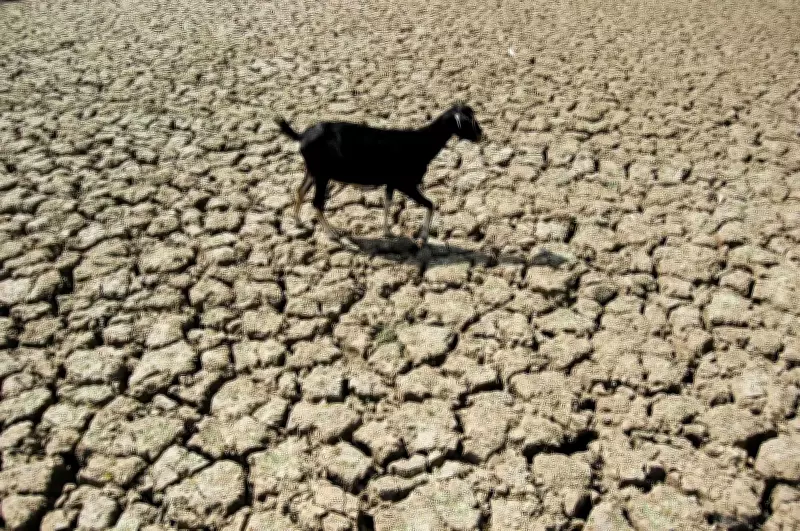
A comprehensive report on Maharashtra's vulnerability to low rainfall has revealed that 181 out of the state's 353 blocks are highly susceptible to farming distress during deficient monsoon years. The findings are part of the 'Anticipatory Action and Response Plan for Maharashtra,' a localized disaster management framework designed to protect vulnerable communities, particularly farmers, from extreme weather events.
Significance Amid El Nino Concerns
The report gains significance as the state prepares for the kharif season amid concerns over El Nino. It advises farmers in rain-deficient areas like Marathwada to cultivate drought-resistant crops such as millets (bajra, jowar, and ragi) and pulses to mitigate risks. Additionally, the report recommends establishing village-level fodder banks to support livestock during droughts and prevent distress sales.
Expert Insights on Climate Resilience
IITM director Suryachandra A Rao emphasized that the report is an early step toward providing farmers with timely and useful information to enhance productivity and reduce risk. 'The report highlights the potential of combining advances in monsoon forecast, climate science, and artificial intelligence to build climate-resilient agriculture. While this is an early-stage effort, it represents an important step toward a future where climate forecasts are translated into timely, actionable decisions that help farmers manage risk, improve productivity, and strengthen resilience in an increasingly variable climate,' Rao stated.

Impact of El Nino on Rainfall
According to the report, El Nino tends to exacerbate dryness in already arid regions. In normal years, 41 blocks receive less than 500 mm of rainfall, but this number rises to 65 during El Nino years. Crops like cotton, maize, and soybean are identified as the most affected. 'Erratic rainfall, long dry spells, and uneven rain distribution are the main causes of farming stress during El Nino years, especially during key crop growth periods,' the report noted.
Government Preparedness Measures
State agriculture officials have confirmed that preparedness measures are underway. Agriculture commissioner Suraj Mandhare stated, 'We have integrated IITM's high-resolution 'Bharat Forecast System' into our emergency operations centre to provide three-hourly, block-level weather updates to farmers on their cellphones. We are already promoting short-duration, drought-resilient crops, specifically pulses and millets, across 181 high-vulnerability blocks to mitigate moisture stress.' He also mentioned the promotion of irrigation tools like drip systems and rain guns, as well as improving water storage by desilting water bodies. The MahaVISTAAR-AI platform is being used to send real-time sowing advice to farmers in multiple languages.
Understanding Block-Level Vulnerability
A block is a decentralized, sub-district administrative division used for planning, implementing, and monitoring grassroots rural development programs. The report categorizes blocks into three groups: 181 highly vulnerable, 78 moderately vulnerable, and 94 low-risk. It also highlights that during El Nino years, crop losses primarily result from reduced cultivated land area rather than lower yields. For the upcoming kharif season, rainfall is expected to be below normal, particularly in Marathwada, central Maharashtra, and western Maharashtra, with the most severe impact anticipated in August and September.
IMD and Agricultural University Recommendations
OP Sreejith, head of the climate monitoring and prediction group at IMD, explained, 'The 181 blocks identified in the report as highly vulnerable were selected based on historical IMD data and our seasonal forecasts. We held a meeting chaired by the Chief Minister in February, followed by another meeting last month to review preparedness for the kharif season. Since our seasonal forecast indicates below-normal rainfall, all departments have already begun taking appropriate measures. The priority is water conservation and ensuring that water-intensive crops are not sown.' The report indicates that drought-resistant crops like jowar, bajra, and ragi experience production losses of only 5-13%, compared to crops like cotton and soybean.

Harihar Kausadikar of Vasantrao Naik Marathwada Agriculture University, Parbhani, advised farmers to avoid water-intensive crops such as cotton, soybean, and sugarcane, and instead cultivate millets and pulses. 'Cotton, soybean, and sugarcane are major crops in Marathwada despite water scarcity. We have been advising farmers in the region to not opt for these water-intensive crops and instead go for millets and pulses, considering the possibility of less rainfall this year. Growing millets is also beneficial for livestock as it can serve as fodder, addressing another concern during lean years,' Kausadikar said.
Criticism from Farmers' Unions
Sunil Malusare, vice-president of the All India Kisan Sabha, Maharashtra, expressed concerns that more needs to be done by the agriculture department. 'The messages do come, but they don't reach everyone. Mostly, they benefit wealthy farmers with good phones, recharges, and network access, not marginal farmers working in the fields. Secondly, ground staff need to work much more. They conduct awareness sessions only in areas near their offices or in certain places, but without proper guidance, most farmers end up making decisions based on their own experience. At the moment, some farmers have prepared their fields, while others are waiting for rain alerts to prepare. If it doesn't rain, life will be extremely tough for farmers in this state and country, and we are not prepared for it,' Malusare warned.
Collaborative Report Preparation
The report was prepared by the International Crops Research Institute for the Semi-Arid Tropics, Hyderabad; ICAR-Central Research Institute for Dryland Agriculture, Hyderabad; International Livestock Research Institute, Nairobi; Indian Institute of Tropical Meteorology, Pune; India Meteorological Department; and the Ministry of Earth Sciences, in collaboration with Maharashtra universities. It was released last month.