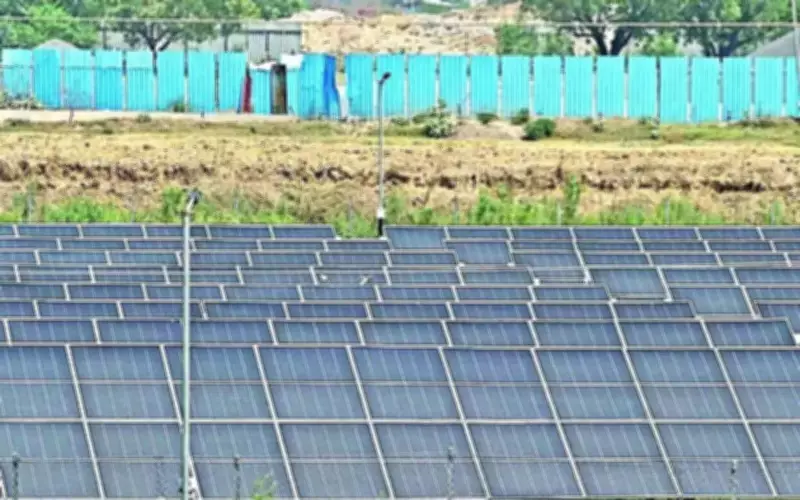
India comfortably met a record peak power demand of 256 gigawatts (GW) on Saturday, the highest ever recorded on a single day, driven by soaring temperatures across the country. The milestone highlights the growing contribution of solar energy to the power generation mix.
Solar Power Plays Key Role
At the time of peak demand of 256.1 GW, reached at 3:38 pm, solar energy contributed nearly 57 GW, or about 22% of total generation. Data from the Grid Controller of India showed that around 12:30 pm, electricity generation from solar plants and rooftop systems rose to about 81 GW, accounting for roughly one-third of the total generation of 242 GW, underscoring its growing significance in the power mix.
Demand Surpasses Previous Records
Driven by high consumption, Saturday's demand surpassed the previous record of 252.1 GW met a day earlier on April 24. The power ministry has projected peak demand to reach 271 GW this year. While coal-fired plants continue to provide the baseload, officials noted that the contribution of non-fossil sources, including solar, wind, hydro, and nuclear, has increased significantly.

Government's Renewable Energy Push
Prime Minister Narendra Modi, in his 'Mann Ki Baat' address, stressed the importance of renewables amid global volatility, calling solar and wind key to India's future and urging adoption of clean energy. He also hailed the Kalpakkam fast breeder reactor achieving criticality as a historic milestone.
Santosh Sarangi, secretary in the Ministry of New and Renewable Energy, said solar generation, including rooftop systems, has been rising rapidly and is playing an important role in meeting peak demand. With higher installation of battery energy storage systems, it will also be able to meet the evening peak demand in the future, he added.