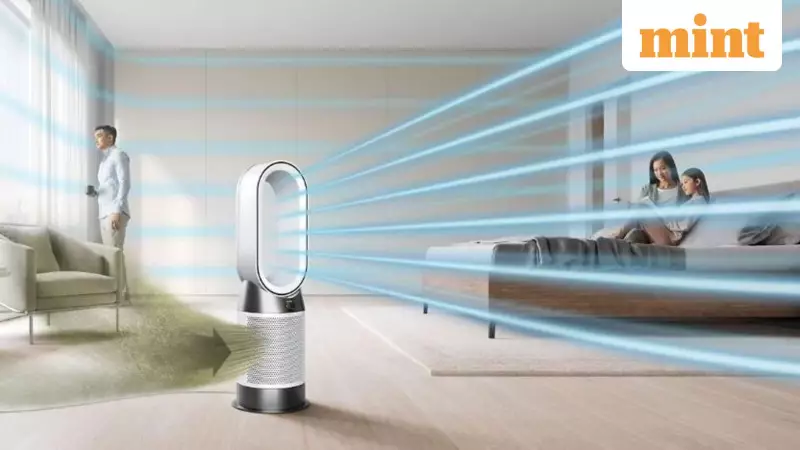
The conversation around air quality in India has moved firmly indoors, with premium brands like Dyson leading a charge into living rooms and bedrooms. Their air purifiers, often combined with heating and cooling functions, command a significant price premium, sparking a crucial question for consumers: Is the hype justified by real-world performance in the unique environment of an Indian home?
Understanding the Dyson Proposition in the Indian Market
Dyson's entry into the Indian air purification space isn't merely about filtering air. The company positions its devices, such as the Dyson Purifier Hot+Cool Formaldehyde HP09, as multi-seasonal solutions. For a market that experiences extreme summers, monsoon humidity, and mild winters, a device that claims to purify, cool, and heat holds inherent appeal. The core technology revolves around a sealed HEPA H13 filter that captures 99.95% of particles as small as 0.1 microns, including allergens, bacteria, and pollen.
However, the Indian challenge is distinct. Pollutants aren't limited to PM2.5 or PM10; they include coarser dust, sand, and persistent allergens. Furthermore, many Indian homes deal with formaldehyde emissions from furniture, paints, and plywood. Dyson's high-end models specifically target this with a selective catalytic oxidation (SCO) filter that destroys formaldehyde molecules. The real-time sensing and automatic mode, which adjusts fan speed based on detected pollutants, is a key selling point for maintaining air quality without constant manual intervention.

Performance in Real Indian Conditions: Strengths and Gaps
In practical use within Indian apartments and independent houses, Dyson purifiers show notable strengths. Their 360-degree air projection ensures effective circulation in a room, unlike purifiers that simply filter air directly in front of them. The integration with the MyDyson app provides detailed, real-time air quality reports, breaking down PM2.5, PM10, VOC (Volatile Organic Compounds), and NO2 levels, which educates users on their indoor environment.
Yet, the performance encounters specific hurdles. The primary filter can get clogged relatively quickly in cities with high dust levels like Delhi or Mumbai, necessitating more frequent checks, though the official lifespan is around a year. The purification efficacy is also highly dependent on room size. While powerful, a single unit is designed for a specific cubic area; using it in larger, open-plan typical Indian living areas can diminish its effectiveness. The machine's sensors are sensitive, often triggering automatic mode during activities like cooking or sweeping, which is accurate but can lead to noisy operation.
The Verdict: Luxury Investment with Tangible Benefits
Evaluating Dyson air purifiers boils down to a value proposition. They are not just purifiers but all-season climate control devices with smart features. For households with allergy sufferers, or those in highly polluted urban centers, the investment can translate to tangible health and comfort benefits. The ability to destroy formaldehyde is a unique advantage in new homes or recently renovated spaces.
However, for consumers solely seeking particulate filtration on a budget, more affordable dedicated HEPA purifiers exist. The Dyson premium covers design, multi-functionality, and smart integration. Users must weigh the cost against the need for a holistic, connected device. In conclusion, Dyson air purifiers perform robustly against Indian pollutants when matched to the correct room size and maintained well. The hype is rooted in technological innovation and versatility, but its ultimate worth is determined by an individual's specific air quality needs and willingness to invest in a premium lifestyle solution.