Electric Vehicle Charging in India: Demystifying the Process for Buyers
Electric vehicles are rapidly gaining popularity across Indian roads, yet a fundamental question continues to puzzle many prospective buyers: how exactly do you charge an EV? Unlike traditional petrol or diesel cars that depend on established fuel stations, electric vehicles offer multiple charging avenues including at home, workplaces, and public charging stations. This comprehensive guide breaks down the essentials of EV charging to help consumers make informed decisions.
Understanding How EV Charging Works
EV chargers are primarily categorized into two types: AC chargers (often referred to as slow or normal chargers) and DC fast chargers. AC chargers typically deliver power ranging from 3.3 kW to 22 kW, making them suitable for longer, overnight charging sessions. In contrast, DC fast chargers operate at much higher power levels, from 30 kW to over 240 kW, enabling significantly faster battery replenishment. The key distinction lies in charging time: AC charging can require several hours for a full charge, whereas DC fast charging can restore most of an EV's battery capacity in a much shorter duration, often within an hour or less.
Types of EV Chargers Used in India
India employs various charging standards to accommodate different vehicle types. AC chargers are the most prevalent and are commonly installed in residential settings, offices, and apartment complexes. These include:

- Type-2 AC Charger: Widely adopted for electric cars, offering reliable performance for daily use.
- Bharat AC-001 Charger: Primarily utilized for electric two-wheelers and three-wheelers, supporting the growing micro-mobility segment.
Power output for these AC chargers generally falls between 3.3 kW and 22 kW. On the other hand, DC fast chargers are engineered for rapid charging and are typically found at public charging stations or along highways. Dominant standards include:
- CCS2 (Combined Charging System): Currently the leading fast-charging system for electric cars in India, compatible with many modern EVs.
High-power DC chargers can deliver between 50 kW and 350 kW, allowing numerous electric vehicles to charge from 10% to 80% battery capacity in approximately 20 to 60 minutes, depending on factors like battery size and vehicle compatibility.
Home Charging: The Most Common and Convenient Option
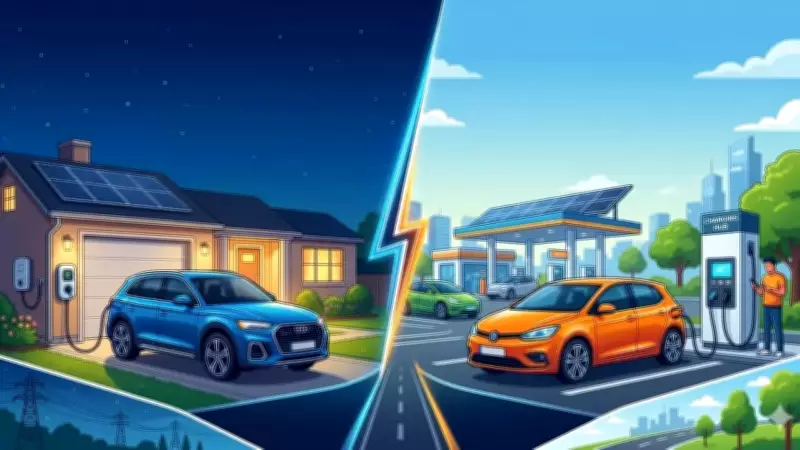
For the majority of EV owners in India, home charging serves as the primary method for keeping their vehicles powered. Many automobile manufacturers actually recommend slow charging at home as the optimal daily solution for battery health and convenience. When purchasing an EV, companies typically provide a home charging unit or wall box charger, which is installed in a parking area and connected to the household electricity supply. Some electric vehicles can even charge using a standard 15-amp plug socket, though a dedicated wall charger is generally faster and enhances safety.
The foremost advantage of home charging is convenience. Owners can simply plug in their vehicle overnight and wake up to a fully charged battery, ready for the day's commute. Additionally, charging at home is usually more economical, as domestic electricity tariffs are often lower than commercial rates charged at public stations, resulting in cost savings over time.
Public Charging: Essential for Travel and Quick Top-Ups
Public charging stations are designed for scenarios where drivers require a quicker recharge, such as during long trips or in emergencies. These stations are strategically located at shopping malls, office parking areas, traditional petrol pumps, highways, and dedicated EV charging hubs. However, public charging typically comes at a higher cost compared to home charging. Pricing depends on the operator and charger type, with fast charging usually commanding a premium due to the elevated equipment and electricity expenses involved.

Despite the cost, public chargers play a crucial role in supporting long-distance travel and providing emergency top-ups, particularly on highways where fast charging can swiftly add substantial range to an EV. As electric vehicle adoption accelerates and charging infrastructure expands nationwide, the gap between electric refuelling convenience and conventional methods is projected to narrow significantly in the coming years, making EV ownership even more accessible and practical for Indian consumers.