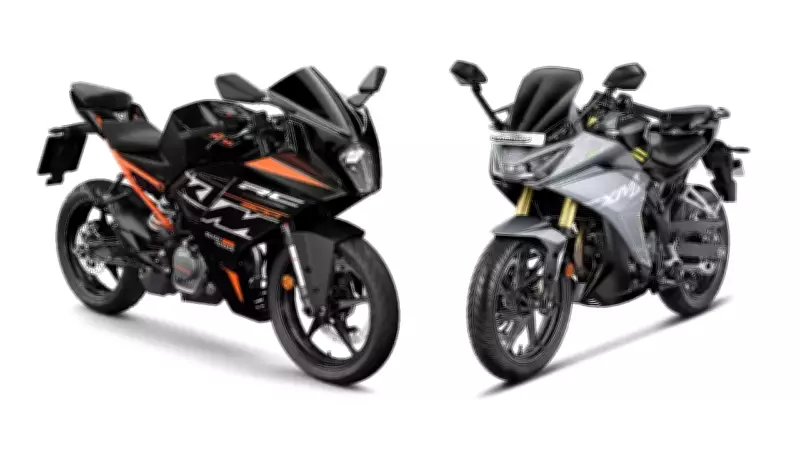
KTM RC 200 vs Hero Karizma XMR 210: In-Depth Analysis for Entry-Level Sport Tourer Enthusiasts
For riders in India seeking an entry-level sport tourer, the market offers compelling choices like the KTM RC 200 and the Hero Karizma XMR 210. These motorcycles compete in a similar price segment, making it essential to understand how they compare across key aspects such as engine performance, hardware features, and overall value. This detailed breakdown will help you make an informed decision between these two popular models.
Engine Specifications: Power and Torque Face-Off
The heart of any motorcycle lies in its engine, and here, both bikes showcase distinct characteristics. The KTM RC 200 is equipped with a 199.5 cc, single-cylinder, liquid-cooled DOHC engine. This powerplant generates 25 horsepower at 10,000 rpm and 19.2 Nm of torque at 8,000 rpm, coupled with a smooth-shifting 6-speed gearbox. In contrast, the Hero Karizma XMR 210 features a slightly larger 210 cc, single-cylinder, liquid-cooled DOHC engine. It delivers 25.5 horsepower at 9,250 rpm and 20.4 Nm of torque at 7,250 rpm, also mated to a 6-speed transmission.
On paper, the Karizma XMR holds a marginal advantage in both power and torque outputs, with its peak figures achieved at lower engine speeds compared to the KTM. This could translate to better low-end responsiveness and a more relaxed riding experience in city conditions.

Hardware and Chassis: Suspension, Braking, and Frame Details
When it comes to hardware, the differences become more pronounced, affecting handling and ride quality. The KTM RC 200 utilizes a trellis tubular frame, which is known for its lightweight and rigid construction. Its suspension setup includes 43 mm USD front forks and a rear monoshock with 10-step adjustability, offering fine-tuned control for aggressive riding.
Conversely, the Hero Karizma XMR 210 employs a steel trellis frame, providing durability and stability. It features 37 mm telescopic front forks and a rear monoshock with 6-step preload adjustment, which may offer a more comfortable ride for daily commuting and touring.
Braking systems are crucial for safety, and both models come equipped with dual-channel ABS. The KTM RC 200 boasts a 320 mm front disc and a 230 mm rear disc, while the Karizma XMR uses a 300 mm petal disc at the front and a 230 mm petal disc at the rear. The larger front disc on the KTM might provide slightly better stopping power, but the petal discs on the Karizma can enhance heat dissipation during prolonged use.
Pricing and Value Proposition
Price is a significant factor for many buyers, and here, the Hero Karizma XMR 210 holds a clear advantage. The KTM RC 200 is priced at Rs 2.16 lakh (ex-showroom), whereas the Hero Karizma XMR 210 comes in at Rs 1.85 lakh (ex-showroom). This price difference of approximately Rs 31,000 makes the Karizma a more budget-friendly option without compromising on essential features like dual-channel ABS and a capable engine.

Key Comparison Points Summarized
- Engine: KTM RC 200 – 199.5 cc, 25 hp; Karizma XMR 210 – 210 cc, 25.5 hp.
- Torque: KTM – 19.2 Nm at 8,000 rpm; Karizma – 20.4 Nm at 7,250 rpm.
- Frame: KTM – trellis tubular; Karizma – steel trellis.
- Front Suspension: KTM – 43 mm USD forks; Karizma – 37 mm telescopic forks.
- Braking: Both have dual-channel ABS; KTM uses standard discs, Karizma uses petal discs.
- Price: KTM RC 200 – Rs 2.16 lakh; Karizma XMR 210 – Rs 1.85 lakh.
In summary, the choice between the KTM RC 200 and Hero Karizma XMR 210 depends on your priorities. If you value aggressive styling, adjustable suspension, and are willing to pay a premium, the KTM might be your pick. However, if you seek a more affordable option with slightly better torque at lower RPMs and practical features, the Karizma XMR 210 stands out as a compelling alternative in the entry-level sport tourer segment.