

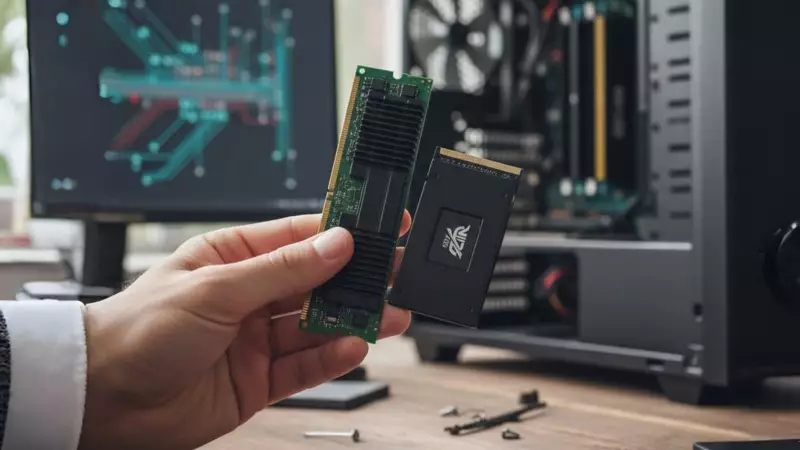
In a major shift for the global memory market, Micron Technology, the world's third-largest RAM supplier, has announced the shutdown of its consumer-focused brand, Crucial. This strategic exit, aimed at redirecting resources towards the booming artificial intelligence sector, effectively transforms the consumer memory space into a duopoly dominated by South Korean giants Samsung and SK Hynix. The move signals potential price hikes and reduced competition for PC builders and everyday consumers.
The End of an Era: Why Micron Pulled the Plug on Crucial
Founded in 1996, the Crucial brand became synonymous with affordable and reliable RAM modules and solid-state drives (SSDs) for personal computers. In an official statement, Micron cited the need "to improve supply and support for our larger, strategic customers in faster-growing segments" as the core reason for this decision. The company's Executive Vice President and Chief Business Officer, Sumit Sadana, explicitly linked the move to AI-driven growth in data centers, which has created a massive surge in demand for memory and storage.
This announcement follows price increase declarations of up to 30% for DRAM and NAND flash modules by Samsung and SK Hynix just a month prior. While Micron will support existing Crucial product shipments until February 2026, it has already halted sales through key global retailers and distributors. The company will continue selling Micron-branded enterprise products to commercial clients.

The financial logic behind this pivot is clear. Despite holding a 25% market share in RAM (compared to Samsung's 40% and SK Hynix's 29%), Micron sees far greater profitability in serving the AI industry. Data centers purchasing memory in bulk and the high-margin High Bandwidth Memory (HBM) used in AI accelerators are now the priority. This was reflected in Micron's Q4 2025 financial results, where a year-over-year DRAM revenue increase to 68.7% was largely driven by HBM3E and advanced data center products.
Consumer Impact: A Looming Duopoly and Price Concerns
For consumers and PC manufacturers like Dell and HP, Micron's exit creates a significant void. The Crucial brand was a key provider of budget-friendly components for nearly three decades. Its departure leaves the market with only two major players: Samsung and SK Hynix.
This new duopoly structure grants these two companies considerable power to set prices with greater freedom. Analysts warn that this could lead to even higher prices for RAM and SSDs, building upon the recent increases. Furthermore, with reduced competitive pressure, the pace of innovation in the consumer memory segment might slow down, as the dominant players face less urgency to introduce new products.
The current market is already under strain due to insatiable demand from AI companies powering chatbots like ChatGPT and Gemini. Reports indicate that even major suppliers are struggling to meet demand, with Samsung and SK Hynix reportedly fulfilling only about 70% of orders. This shortage scenario, reminiscent of the GPU crisis during the cryptocurrency boom, could persist for years, exacerbated by Micron's strategic withdrawal from the consumer space.
What Lies Ahead for the Memory Market?
The consolidation of the consumer RAM market marks a definitive turn where corporate and AI needs are prioritized over consumer affordability. The immediate consequences are clear:
- Reduced choice and higher costs for individuals building or upgrading PCs.
- Increased dependency on the pricing strategies of two dominant companies.
- Uncertainty over whether another player will emerge to fill the budget segment gap left by Crucial.
As the tech world's hunger for AI computing grows, the ripple effects are now being felt directly in the consumer electronics aisle. Micron's bet on AI signifies a broader industry realignment, where the components for powerful data centers are deemed more critical—and profitable—than those for the average user's desktop.






