NASA's Artemis II Mission: iPhones Capture Historic Lunar Journey
When NASA's Artemis II spacecraft launched into the cosmos, it carried not only four courageous astronauts and decades of engineering ambition but also an extraordinary array of cameras, smartphones, and advanced communications technology. This equipment was meticulously deployed to document humanity's monumental return to lunar orbit in unprecedented detail.
Smartphones in Space: A NASA First
In a groundbreaking move, NASA approved the use of personal smartphones aboard the Artemis II mission, making it one of the first crewed spaceflights where astronauts have brought their own handheld devices into the extraterrestrial environment. The astronauts onboard carried four units of the iPhone 17 Pro Max, setting a new precedent for consumer technology in space exploration.
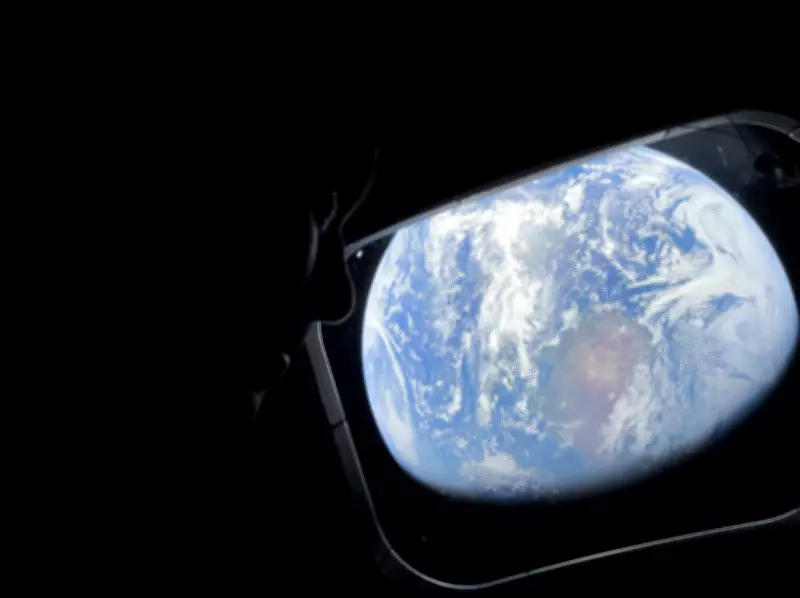
NASA has now released a series of striking and evocative images captured exclusively on the iPhone 17 Pro Max during the Artemis II mission. This marks the inaugural instance where consumer smartphones have been officially utilized to document a crewed lunar mission, blending everyday technology with spacefaring endeavors.

Historic Photos from Lunar Orbit
The photographs, taken on April 2, 2026, feature astronauts Reid Wiseman and Christina Koch aboard the Orion spacecraft. In one particularly poignant image, the astronauts are seen gazing back at Earth through the cabin windows, capturing a moment of reflection during their journey toward the Moon.
"NASA astronaut and Artemis II mission specialist Christina Koch peers out of one of the Orion spacecraft's main cabin windows, looking back at Earth, as the crew travels towards the Moon," wrote NASA while sharing the image on Flickr. This description underscores the emotional and scientific significance of the mission.
The Rigorous Approval Process for iPhones in Space
For the first time in history, astronauts aboard Artemis II are carrying personal smartphones—specifically four units of the iPhone 17 Pro Max. While this may seem like a minor detail, the process to get these devices approved for spaceflight was exceptionally complex and thorough.
The clearance protocol followed a strict four-phase system designed to ensure safety and functionality in the harsh conditions of space:
- Hardware Introduction: The devices are first presented to a dedicated safety panel for initial assessment.
- Hazard Identification: This phase involves identifying potential risks, including moving parts, materials like glass that could shatter in microgravity, and other environmental concerns.
- Mitigation Strategies: Engineers outline specific measures to address identified hazards, ensuring the devices can withstand space conditions.
- Validation: The final stage rigorously tests and validates that the implemented fixes are effective and reliable.
Durability emerged as a critical factor during this process. The iPhone 17 Pro Max utilizes Ceramic Shield 2 technology, which Apple claims is tougher than any smartphone glass available. However, NASA's concerns extended far beyond mere breakability. Devices behave fundamentally differently in microgravity—issues such as heat dissipation, battery stability, and even storage methods all required careful consideration and adaptation.
Complementing Traditional Space Photography
While the iPhone 17 Pro Max has garnered significant attention, NASA continues to rely on its traditional, specialized imaging equipment for mission-critical documentation. The Artemis II crew is also using high-performance cameras including the Nikon D5, Nikon Z9, and GoPro HERO4 Black to capture high-resolution scientific and operational imagery essential for research and mission analysis.
The iPhones serve as a complementary tool to these professional devices, providing accessible, spontaneous snapshots from the astronauts' personal perspectives. This dual approach enriches the visual record of the mission, combining technical precision with human-scale storytelling.

This integration of consumer technology into space missions represents a significant step forward, potentially paving the way for more accessible and innovative documentation methods in future explorations. The Artemis II mission not only advances lunar science but also demonstrates how everyday devices can contribute to humanity's grandest adventures beyond Earth.