

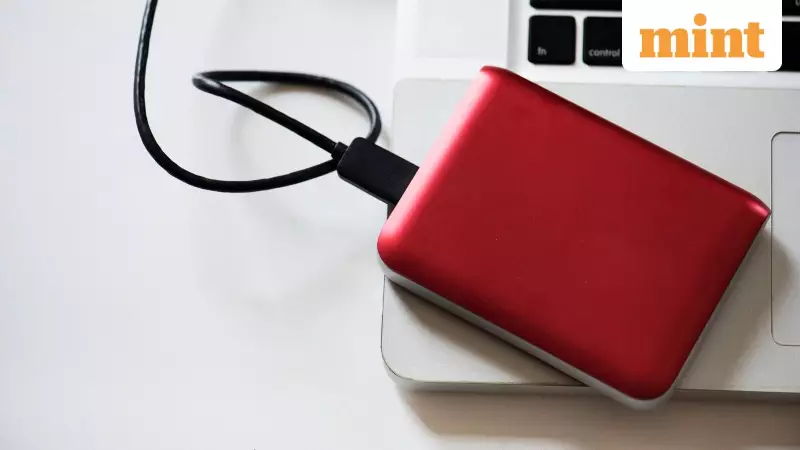
Portable Solid State Drives (SSDs) have evolved from niche gadgets to indispensable daily companions for millions. They shuttle critical work documents between office and home, safeguard precious backups during travel, and often hold a treasure trove of personal information that would be devastating if exposed. While blistering speed and sleek, compact designs are the initial draw for buyers, the paramount concern shifts to robust data protection the moment the drive leaves the safety of a personal desk.
The Invisible Shield: How Hardware Encryption Works
The loss of a portable SSD is a common mishap. It can easily fall out of an unzipped bag, be forgotten while plugged into a conference room PC, or be borrowed without a second thought. Unlike cloud storage, a physical drive doesn't ask for a login once connected to a USB port. Without a protective barrier, anyone can access its contents in seconds. This is where hardware encryption becomes the critical differentiator.
Modern secure portable SSDs integrate encryption directly into the drive's controller chip. This means the process of scrambling data into an unreadable code happens at the hardware level, not through software running on your computer. The moment any file is written to the drive, it is automatically encrypted using the AES 256-bit standard—the same level of security trusted by global banks and government agencies.

Authentication acts as the digital gatekeeper. Users might unlock their drive with a password via dedicated software or, in more advanced models, with a fingerprint scanner built into the casing. Until this authentication is successfully completed, the drive presents itself as a locked vault, revealing nothing. This hardware-based approach has key advantages: it cannot be bypassed by running a different operating system, and it maintains protection even if the SSD's internal components are physically accessed.
Guarding Against Everyday Threats, Not Just Theft
The risks to data extend far beyond a stolen device. Professionals frequently connect their portable drives to shared computers, client systems, or public kiosks, exposing them to malware, unauthorized data copying, or simple prying eyes. An encrypted SSD limits the damage in these compromised environments.
Even if a connected system is infected, the encrypted files remain gibberish outside of the authorized user session. Once unplugged, the data locks itself again automatically. This is vital for drives containing full system backups, which are a goldmine of passwords, emails, browsing history, and confidential records.
Leading encrypted SSD models incorporate smart features like auto-lock, which secures the drive after a period of inactivity, and secure erase, which allows for the instant and permanent destruction of encryption keys when repurposing or disposing of the drive.
Seamless Security for the Modern User
A major breakthrough in recent years is the elimination of the traditional trade-off between security and usability. Early encryption solutions often slowed performance or required complex setups. Today's hardware-encrypted SSDs operate silently in the background with no perceptible impact on transfer speeds. Setup is a one-time affair, and subsequent unlocking takes mere seconds.
Furthermore, because the encryption is handled by the drive itself, it offers cross-platform compatibility. Users can seamlessly move between Windows, macOS, and Linux systems without compromising security or needing special drivers. For businesses and freelancers, this built-in security simplifies compliance with data protection regulations that mandate 'encryption at rest.'
For the everyday user, it means personal tax documents, family photos, and identity files are protected by enterprise-grade security without requiring any technical expertise. Encryption has transitioned from a complex, specialist tool to a standard, essential feature.

In conclusion, as portable SSDs shoulder more responsibility for our digital and professional lives, treating encryption as an optional extra is a significant risk. The technology now assumes that loss or unauthorized access is a matter of 'when,' not 'if,' and provides a fundamental layer of protection. In today's mobile world, securing your portable storage is no longer just about safeguarding files—it's about preserving privacy, trust, and professional integrity.





