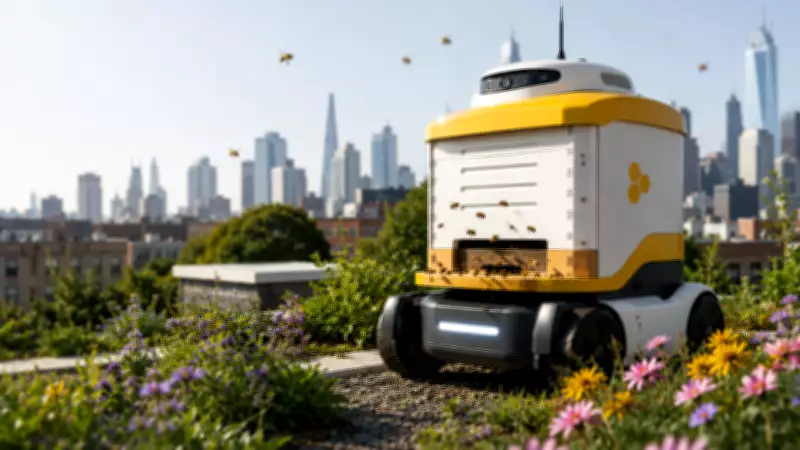
Urban beekeeping is entering a new era with an innovative concept developed by Christoffer Weinreich, a student designer at Umeå Institute of Design. His self-driving beehive, known as MOBEE, reimagines how bees could be managed within modern cities. Unlike traditional stationary hives, this mobile hive moves autonomously through urban environments, helping colonies access diverse flowering areas while reducing logistical challenges for beekeepers.
How MOBEE Works
The MOBEE concept combines a compact autonomous vehicle with modular beehive units. It can navigate city streets on its own or with a beekeeper on board. The modular design allows hives to be relocated to areas with optimal pollination opportunities, simplifying hive management in densely populated areas. The system envisions a network of connected urban hives rather than isolated colonies, addressing the challenge of finding suitable forage throughout the year.
Addressing Pollinator Decline
Pollinators are crucial for ecosystems and food production. The European HIVEOPOLIS initiative highlights bees as providers of vital ecosystem services through pollination. By relocating colonies as floral resources shift seasonally, MOBEE aims to support healthier bee populations and improve pollination services within cities. This reflects a broader trend toward technology-assisted conservation, with smart hives using sensors to monitor temperature, humidity, and colony conditions in real time.

Technology and Ecology Combined
Weinreich's project demonstrates how design students contribute fresh perspectives to environmental challenges. By merging autonomous mobility with ecological stewardship, MOBEE moves beyond conventional thinking about transportation and conservation. As environmental innovator Janine Benyus advocates through biomimicry, nature can serve as a model for innovation. MOBEE embodies this philosophy by using technology to work alongside nature, not replace it.
Future of Urban Sustainability
Although MOBEE remains a conceptual design, it aligns with growing investments in pollinator corridors, rooftop gardens, and green infrastructure in cities worldwide. A mobile hive system could complement these efforts by dynamically connecting bee colonies with available floral resources. Whether self-driving beehives become reality or remain experimental, they underscore the need to design future cities not only for people but also for species that sustain urban ecosystems.