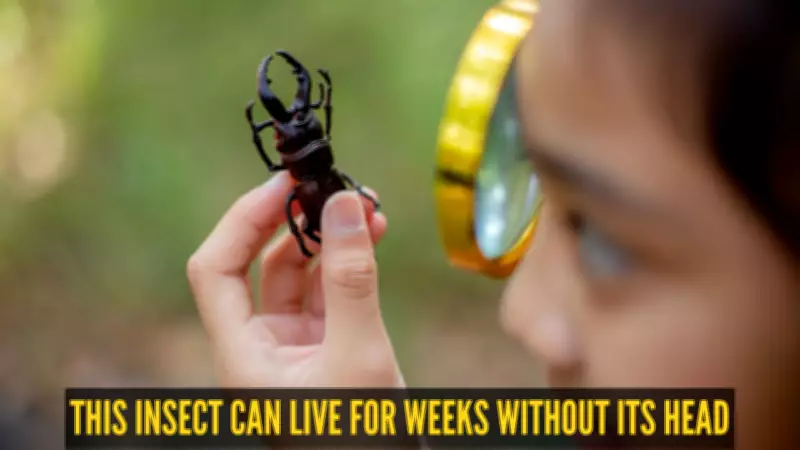
Most mammals, including humans, rely entirely on the head for survival. It holds our brains, our senses, and essentially controls our whole body. Naturally, decapitation means instant death for us. But nature loves a loophole. In the insect world, the anatomical rulebook is completely rewritten. Take one of the most stubborn household pests: for them, losing a head is not a fatal strike but just an annoying setback. Chop off their head, and they won't drop dead. They can keep walking, reacting to stimuli, and stay alive for more than a week.
The Ultimate Survivor's Secret
Yes, you are thinking correctly. That pest is the cockroach. To understand how this insect survives for a week without a head, we need to examine its anatomy. When a human is decapitated, our highly pressurized blood vessels drain life in mere seconds. Cockroaches, however, operate on an open circulatory system with incredibly low pressure. When their neck is severed, the wound seals itself almost immediately. There is no massive bleeding.
Additionally, they do not use their heads to breathe. Roaches lack lungs entirely and do not draw air through a mouth or nose. Instead, they rely on spiracles—microscopic holes running down the sides of their bodies. These little vents pipe oxygen directly from the surrounding air into their tissues.

What About the Brain?
While the insect does possess a brain up top, it does not control basic bodily functions. Roaches have tiny bundles of nerve tissue known as ganglia scattered through every body segment. These act as backup mini-brains that handle standard reflexes. Thanks to this distributed nervous system, the remaining body can still stand, move around, and flinch if poked.
How Do They Die?
As amazing as a headless cockroach is, it is not invincible. The body can push through for weeks, but the countdown starts the moment the head comes off. No head means no mouth, making eating and drinking impossible. A roach can survive without food for a while, but it will eventually dry up and die from dehydration after roughly a week or two.
Other Animals Like This
While the cockroach is widely known for surviving decapitation, a few other creatures can also keep going after losing their heads:

- Planarian Flatworms: These aquatic worms take survival to a new level. Chop a flatworm's head off, and the body does not just stay alive—it completely regrows a fresh head with a new brain. Oddly, the severed head can swim away and grow an entirely new body.
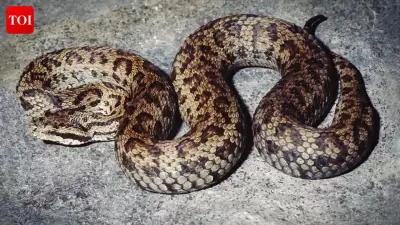
- Snakes (A Warning): A snake's body dies quickly without its head, but the detached head remains extremely dangerous. Snakes have slow metabolisms, and the bite reflex is hardwired into cranial nerves. A severed snake head can still snap its jaws and deliver venom over an hour after being cut off.