

India's Astronaut Corps Established as Permanent National Capability
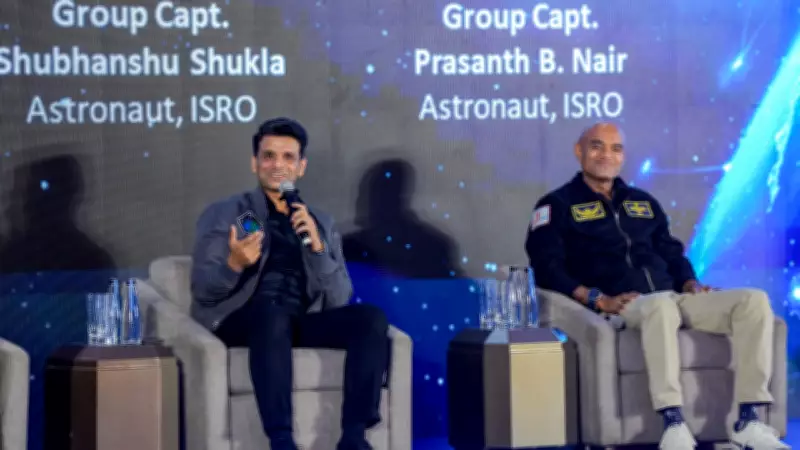
India's astronaut corps represents a permanent national capability rather than a one-time experiment, according to statements made by Indian astronauts Group Captain Prashanth Nair and Group Captain Shubhanshu Shukla. The astronauts delivered these remarks during the US-India Space Business Forum event held in Bengaluru, organized by the US Consulate General, Chennai and the US-India Strategic Partnership Forum.
Building a Sustainable Human Space Program
Group Captain Prashanth Nair, known as Papa, emphasized the enduring nature of India's human spaceflight ambitions. "The astronaut core is here to stay. There's going to be an Indian human space programme forever, from the Gaganyaan mission to the Bharatiya Antriksh Station and to landing on the Moon," Nair declared. He highlighted the long-term responsibility carried by the current crew of four astronauts, noting their duty extends decades into the future as they establish foundational protocols and systems.
Civilian Spaceflight on the Horizon
Group Captain Shubhanshu Shukla, referred to as Shux, provided clear insight into the future of civilian space travel within India's program. "Civilians going to space is going to happen. Initial missions are critical to prove technology, but after that it opens up for everyone," Shukla stated unequivocally. This vision positions Gaganyaan as a prototype mission that will eventually enable broader access to space for Indian citizens beyond the initial astronaut cadre.

Hands-On Involvement in Spacecraft Design
The astronauts revealed that all four crew members—including colleagues Ajit Krishnan and Angad Pratap—are now deeply embedded with ISRO engineers, actively shaping:
- Spacecraft design and configuration
- Safety procedures and emergency protocols
- Mission-specific operational guidelines
- Launch pad procedures and crew escape systems
- Human-rating standards for spaceflight
Nair compared this comprehensive involvement to "building an air force from scratch," emphasizing the foundational nature of their work.
International Training Informs Indian Program
The astronauts' extensive international training has provided India with rare first-hand insight into global best practices. Their preparation includes:
- Training in Russia on the Soyuz spacecraft system
- Advanced training in the United States with NASA, SpaceX, and Axiom Space
Shukla noted that "experience on the Soyuz capsule and flying the Crew Dragon gives you a very good insight of what the system should look like and how we should evolve our own programme." This international exposure directly informs the development of India's indigenous space capabilities.
Cultural Exchange and Collaborative Vision
Both astronauts reflected on the cultural impact of their year-long training in the United States. Shukla described training at historic facilities where Apollo program astronauts once worked, noting that "you absorbed not just from people who were teaching you, but also the walls and pathways." The environment proved so welcoming that they "did not feel we were in a different country."
Nair emphasized the intersection of technology and humanity in space exploration, stating "space epitomises deep tech, but it must also involve art because that is what human beings bring to the table." He called for a "revolution in space affairs" that extends beyond rocket development to include concepts like orbital data centers and collaborative lunar missions with Artemis program partners.
Test Pilot Perspective Shapes Mission Development
As test pilots, the astronauts bring specialized expertise to the Gaganyaan program. Shukla explained their role: "As test pilots, our role is to work with designers to evolve a system which can finally be used by the fleet. That is what Gaganyaan is, a prototype mission." They spend most days in technical briefings with spacecraft designers, ensuring systems meet both technical requirements and human operational needs.

Global Collaboration and Earthly Identity
Looking toward the future, Shukla highlighted the collaborative nature of space exploration. "When you leave the planet, Earth becomes your identity. There are no countries there," he observed. This perspective will guide India's approach as the nation progresses from low-Earth orbit missions to lunar exploration and beyond, working alongside international partners in the spirit of shared discovery.
The astronauts' statements collectively paint a picture of India's space ambitions as both ambitious and sustainable, with the Gaganyaan program serving as the foundation for a comprehensive, permanent human spaceflight capability that will eventually include civilian participants and contribute to global space exploration efforts.





