India's Satellites Navigate Crowded Orbits Amid Global Space Boom
India's satellite fleet faced unprecedented challenges in 2025, navigating through an increasingly congested orbital environment that generated more than 1.5 lakh close approach alerts specifically for Indian space assets. This critical data comes from the comprehensive Indian Space Situational Assessment Report 2025, which was officially released to the public on Thursday. The alarming frequency of these warnings highlights a fundamental transformation in global space operations and the mounting pressures on satellite safety protocols.
Unprecedented Alert Volume from International Monitoring
The staggering volume of alerts originated from the Combined Space Operations Center (CSpOC) of the United States Space Command, serving as a stark indicator of the rapidly evolving space landscape. While 2025 witnessed record-breaking launch activities worldwide, the detailed report now reveals the operational strain behind those impressive numbers. Approximately 1.6 lakh close approach alerts were recorded across all space-faring nations, demonstrating how frequently satellites now face potential collision risks in Earth's increasingly crowded orbits.
Constellation Expansion Drives Orbital Congestion
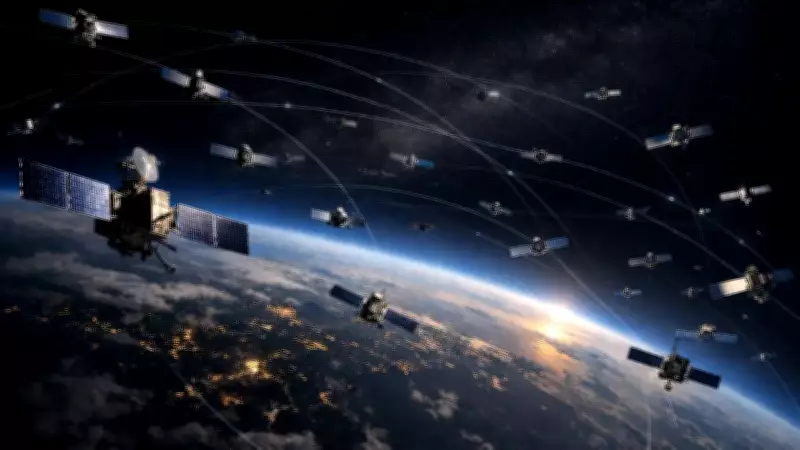
This orbital congestion is primarily fueled by the explosive growth of commercial satellite constellations. Throughout 2025, multiple single-day launch events added more than 100 objects into orbit simultaneously, often through complex rideshare missions or overlapping deployments by competing commercial space ventures. Such concentrated orbital insertions have dramatically complicated space traffic coordination, resulting in shorter warning windows and occasionally limited tracking data availability for collision avoidance systems.

ISRO's Proactive Collision Avoidance Measures
For the Indian Space Research Organisation, this challenging environment has necessitated continuous monitoring and frequent orbital adjustments. Indian space missions executed 18 critical collision avoidance maneuvers during the year, comprising 14 in low Earth orbit and four in geosynchronous orbit. The report meticulously documents that all maneuver plans, including collision avoidance maneuvers, underwent rigorous close approach risk analysis to eliminate potential conflicts with neighboring space objects within days of execution.
"Eighty-two maneuver plans were revised to avoid post-maneuver close approaches with other space objects for low Earth orbit satellites, and two were revised to prevent post-maneuver conjunctions for geosynchronous orbit satellites," the report explicitly states. This systematic approach to conjunction assessment and collision risk mitigation was consistently applied even for deep-space missions, including the Chandrayaan-2 Orbiter which performed 16 orbit maneuvers with two subsequent adjustments.
Global Space Traffic Reaches Critical Mass
The report identifies a crucial turning point in space operations: with multiple large-scale constellations planned for deployment, operational satellites could outnumber space debris within this decade. While this might suggest improved orbital utilization, it simultaneously means more objects moving through increasingly narrow orbital corridors, substantially increasing the burden on global space traffic management systems.
Globally, 2025 recorded 315 successful launches that placed 4,651 objects into orbit, representing a significant increase compared to previous years. The space object population grew by 2,963 objects from 254 launches in 2024 and 3,135 objects from 212 launches in 2023. Of the 4,651 objects placed in orbit during 2025, 4,198 are confirmed operational satellites. Although 1,911 objects re-entered Earth's atmosphere in 2025, the overall population of objects in space continues its upward trajectory, raising serious long-term sustainability concerns.

Expanding Risks Beyond Orbital Space
The risks associated with space congestion are no longer confined to orbital environments. The report documents several instances where space debris survived atmospheric re-entry and fell over inhabited regions, fortunately without causing casualties. It also references an incident where a Chinese spacecraft suffered window damage, likely from micrometeoroid impact, which delayed the crew's scheduled return mission.
India's Steady Space Operations Amid Challenges
India maintained consistent space activity throughout 2025, conducting five launches from Sriharikota, though one mission failed to achieve its intended orbit. Eight Indian satellites were successfully placed in orbit through a combination of domestic and international launch services. The year also witnessed significant operational milestones including:
- Controlled disposal of a navigation satellite into a designated graveyard orbit
- Continued operation of deep-space missions including Chandrayaan-2 and Aditya-L1
- Ongoing development of indigenous tracking capabilities under Project NETRA
- Plans to equip all Indian satellites with de-orbit capability by 2030
Preparing for an Increasingly Congested Space Future
ISRO is actively preparing for a more congested orbital future through multiple strategic initiatives. Significant efforts are underway to strengthen indigenous space object tracking capabilities under Project NETRA (Network for space object TRacking and Analysis). Concurrently, the space agency has established plans to ensure all future Indian satellites incorporate de-orbit capability by 2030, addressing growing concerns about space debris management and long-term orbital sustainability.
The comprehensive findings of the Indian Space Situational Assessment Report 2025 collectively indicate a clear paradigm shift: managing space traffic is rapidly becoming as critical as launching missions themselves, as Earth's orbital environments grow progressively busier with each passing year. This transformation demands international cooperation, advanced tracking technologies, and robust regulatory frameworks to ensure the sustainable use of space for future generations.