India's Semiconductor Mission Enters New Phase with Focus on Innovation and Talent
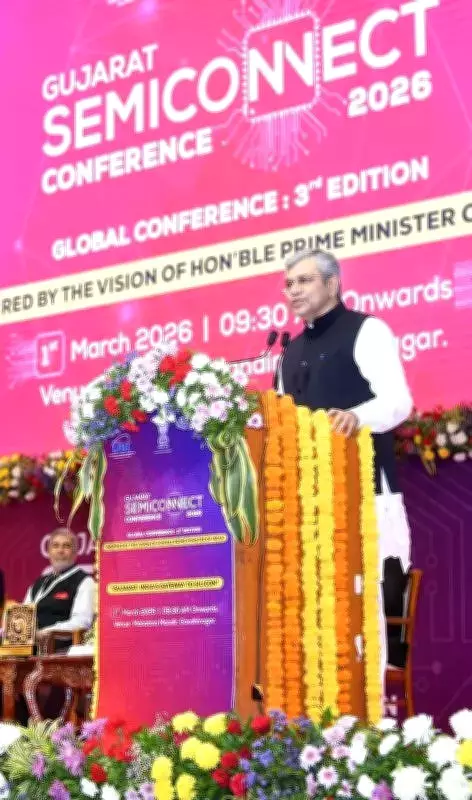
Union Minister of Electronics and Information Technology, Ashwini Vaishnaw, has unveiled the strategic priorities for the India Semiconductor Mission (ISM) 2.0, emphasizing a robust push towards deep-tech startups and the creation of a comprehensive design ecosystem. Speaking at the Gujarat SemiConnect Conference 2026, the minister highlighted that as the global semiconductor industry expands from $800-900 billion to a trillion-dollar market, India is poised to capitalize on this growth by addressing critical gaps in talent and infrastructure.
Key Objectives of ISM 2.0
The minister outlined that the top priority for ISM 2.0 will be establishing a design ecosystem to empower deep-tech startups. This initiative aims to provide these startups with the resources and support needed to develop cutting-edge technologies, potentially fostering the next generation of companies akin to global leaders like Qualcomm. Vaishnaw stressed that this focus is essential for India to move beyond manufacturing and into high-value design and innovation within the semiconductor sector.
Bridging the Talent Gap
Addressing the impending talent shortage, Vaishnaw noted that the second phase of the mission is expected to create a 2-million talent gap, presenting significant opportunities for students and professionals. To tackle this, the government plans to expand educational outreach from 350 universities under ISM 1.0 to 500 universities, enhancing training and skill development programs. This expansion is designed to equip the workforce with the necessary expertise to support India's semiconductor ambitions.

Current Progress and Future Plans
Vaishnaw provided an update on India's semiconductor manufacturing landscape, revealing that 10 semiconductor plants are currently in development. The first of these plants is set to commence commercial production soon, with a second facility following shortly after. Additionally, three more plants are scheduled to begin commercial operations within the year. Collectively, these projects represent an investment of approximately Rs 1.60 lakh crore, underscoring the government's commitment to building a self-reliant semiconductor industry.
Global Context and Strategic Importance
The minister's announcement comes at a time when the semiconductor industry is experiencing rapid global growth. By prioritizing equipment manufacturing and designing within the country, ISM 2.0 aims to reduce dependency on imports and enhance India's position in the international market. This strategic shift is expected to not only boost economic growth but also create numerous job opportunities and drive technological innovation across various sectors.
In summary, ISM 2.0 represents a significant step forward in India's semiconductor journey, with a clear focus on fostering innovation through deep-tech startups, building a resilient design ecosystem, and preparing a skilled workforce to meet future demands.