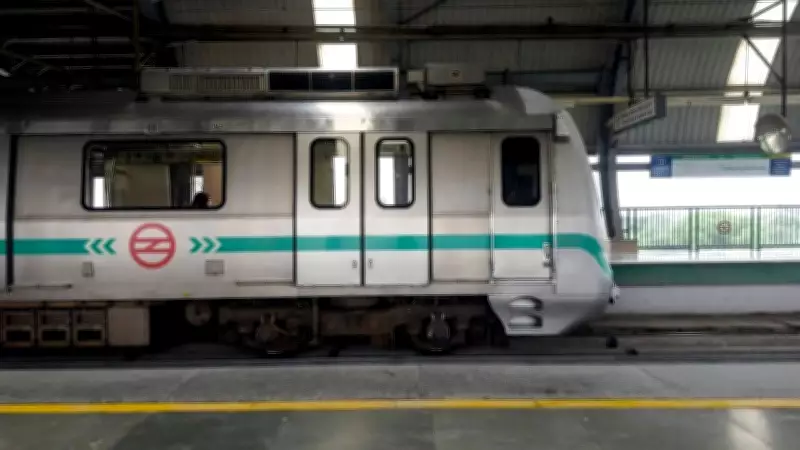
The city of Jaipur, famously known as the Pink City, is undergoing rapid urbanisation, leading to increased traffic congestion and a pressing need for efficient transportation services. In response, the Government of India has approved the Jaipur Metro Phase 2 project, a significant step towards modernising the city's infrastructure.
Route and Key Features of Jaipur Metro Phase 2
Jaipur Metro Phase 2 proposes a North-South corridor stretching from Prahladpura in the south to Todi Mod in the north. The corridor will span approximately 41 kilometres, marking a substantial expansion of the existing metro network. The plan includes 36 metro stations, predominantly elevated, with a few critical underground stations. These stations will be strategically located in high-density areas, including near the airport.
Key regions along the route include:

- Industrial zones such as Sitapura and Vishwakarma Industrial Area
- Institutional and medical facilities like SMS Hospital
- High residential zones including Vidhyadhar Nagar
- Infrastructure facilities such as Jaipur International Airport
The new corridor will integrate with the existing Phase 1 line via interchange stations. Construction is targeted for completion before September 2031, with phased implementation.
Cost and Implementation
The Jaipur Metro Phase 2 project involves an investment of approximately ₹13,038 crore, making it one of the largest infrastructure projects in Rajasthan. The Rajasthan Metro Rail Corporation Limited (RMRCL), a joint venture between the central and state governments, will implement the project. This structured funding approach ensures financial feasibility while enabling the adoption of modern metro technologies.
Boost to Connectivity and Urban Mobility
A primary objective of Jaipur Metro Phase 2 is to significantly enhance city-wide connectivity. While the current metro network primarily serves the east-west corridor, Phase 2 will introduce a robust north-south link, connecting previously underserved areas. This expansion is expected to:
- Reduce travel time on major city routes
- Alleviate traffic congestion in heavily congested areas like Tonk Road
- Encourage the use of public transport over private cars
- Improve mobility to workplaces and educational institutions
By connecting industrial, business, and residential centres, the metro will boost economic activity and efficiency. Additionally, the project aligns with India's sustainability goals, as metro systems reduce carbon emissions.
Real Estate and Property Market Impact
The impact of Jaipur Metro Phase 2 on the real estate sector is expected to be substantial. Historically, metro connectivity has led to increased property demand and price appreciation in cities like Delhi, Bengaluru, and Mumbai, and Jaipur is likely to follow a similar trend.
- Rise in property prices: Properties near metro stations will see consistent value appreciation due to improved accessibility.
- Growth of new investment hotspots: Areas like Sitapura, Jagatpura, and Vidhyadhar Nagar are poised to become new zones for residential and commercial investments.
- Demand for rental properties: Proximity to metro stations will increase demand for rental flats, especially near office and college hubs.
- Transit-oriented development: The project exemplifies transit-oriented development, where urban planning revolves around metro stations.
Overall, the metro expansion is expected to create a ripple effect, driving infrastructure growth and enhancing the city's real estate ecosystem.
The Jaipur Metro Phase 2 project is not merely a transport system but a transformational process that will reshape the city. With a 41 km corridor, 36 stations, and a total cost of ₹13,037.66 crore, it will improve connectivity, boost the economy, and lower the carbon footprint. Real estate development will also gain momentum as the project progresses.