From Kitchen Scraps to Clean Cooking Fuel: An Engineer's Vision
In countless Indian households, the kitchen dustbin silently accumulates a daily assortment of vegetable peels, leftover rice, fruit skins, and spoiled food items. Once discarded, this organic waste typically disappears from view, ultimately finding its way to landfills where it decomposes slowly, releasing harmful greenhouse gases into the atmosphere.
At a time when fuel supply disruptions and increasing reliance on LPG cylinders have become significant concerns for kitchens nationwide, the quest for alternative energy sources is growing more urgent. For Pune-based engineer Priyadarshan Sahasrabuddhe, this urgency stemmed from a simple observation at home and a persistent question: could everyday kitchen waste be transformed into viable cooking fuel?
A Question Born in the Kitchen
The Pune engineer, an alumnus of the Indian Institute of Technology Bombay, embarked on a mission to find answers within his own household. Several years ago, while working in his family business, he noticed the substantial quantity of leftover food being discarded after meals. This sight lingered in his mind. Initially, he experimented with composting to minimize waste, but this approach felt incomplete. He recognized that the organic waste still possessed untapped potential.

Unlocking Fuel from Food Scraps
Through further research, Sahasrabuddhe delved into the science of biofuels. He discovered a straightforward yet powerful principle: the same organic waste generated in kitchens could be broken down by bacteria to produce methane gas—a clean fuel suitable for cooking. Rather than directing waste to overflowing landfills, households could harness it as an energy source. In 2017, this concept materialized as Vaayu, a compact domestic biogas plant designed for ordinary homes.
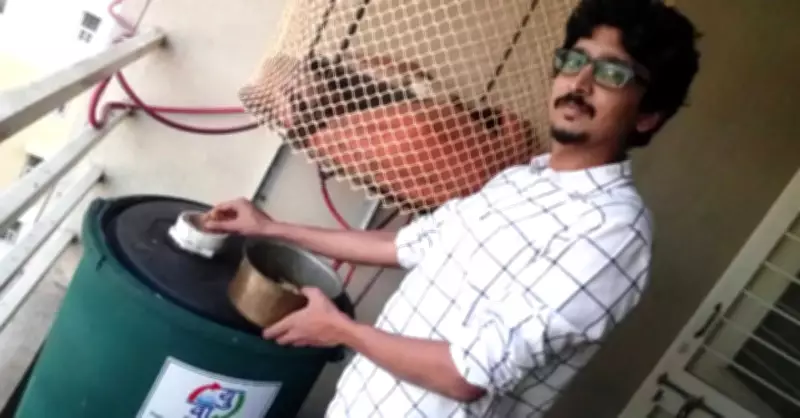
The system employs a natural process called anaerobic digestion to convert organic kitchen waste into methane. Over time, numerous households realized that the generated gas could be piped directly to a stove, while the residual slurry served as nutrient-rich manure for plants.
A Successful Home Experiment
For Sahasrabuddhe, the experiment commenced at home. Utilizing daily food scraps, his system began producing approximately 800 liters of biogas per day—sufficient to meet a significant portion of his household's cooking requirements. The outcome was remarkable: the family substantially reduced its dependence on LPG cylinders, saving several cylinders annually. However, the technology represented only one facet of the challenge; the greater obstacle was altering ingrained habits.
Persuading a Neighborhood
In the initial stages, Sahasrabuddhe personally visited neighbors in his apartment building to elucidate the importance of segregating organic waste from other garbage. Each morning, he went door-to-door, reminding residents to separate their waste. On certain days, he even collected organic waste himself from nearby garbage bins to ensure the system continued operating.
Gradually, curiosity supplanted hesitation. As neighbors witnessed how kitchen scraps could be converted into usable cooking gas, they started participating. Today, his local community contributes nearly 8–10 kilograms of organic waste daily to the system.
From Experiment to Growing Movement
What originated as a personal experiment has evolved into a modest yet impactful movement. Through his startup, Sahasrabuddhe has installed over a hundred Vaayu units in cities including Pune, Nashik, Hyderabad, and Aurangabad. Collectively, these installations process nearly two tonnes of food waste daily and curtail the consumption of hundreds of LPG cylinders each year.
Nevertheless, Sahasrabuddhe's vision transcends technology. He has also established an informal community named Vaayu Mitra, uniting individuals interested in sustainable living and waste management. The group encourages households to adopt biogas solutions and trains waste collectors to operate the systems, aiding their transformation into local energy suppliers. For him, the message is simple yet profound: organic waste is not merely garbage awaiting disposal; it is a resource awaiting recognition.

Reevaluating What We Term Waste
In a nation where landfills continue to expand and air pollution remains a pressing issue, small household solutions may not entirely resolve the crisis. However, they can initiate a shift in how people perceive waste.
For Sahasrabuddhe, this change in mindset constitutes the genuine transformation. Each kitchen scrap converted into fuel serves as a reminder that environmental change does not always commence with extensive policies or technologies. Sometimes, it begins quietly in a home kitchen, with one individual posing a simple question about what we choose to discard.