For years, the ancient Maya civilization was imagined as a collection of independent city-states scattered across dense jungles. However, a groundbreaking discovery in northern Guatemala has completely overturned that view. Using advanced laser technology, archaeologists have peered through the forest canopy to reveal that the Maya were, in fact, a highly organized society with a dense network of structures and roads.
Laser Technology Unveils Hidden World
The discovery was made possible by light detection and ranging, or LiDAR, a technique that fires laser pulses from an aircraft to generate highly accurate three-dimensional maps of the ground below. According to a research update from Tulane University, the PACUNAM LiDAR initiative mapped over 2,000 square kilometers of the Petén region. This effort led to astonishing findings, including 61,480 previously unknown structures.
Roads That Connect a Civilization
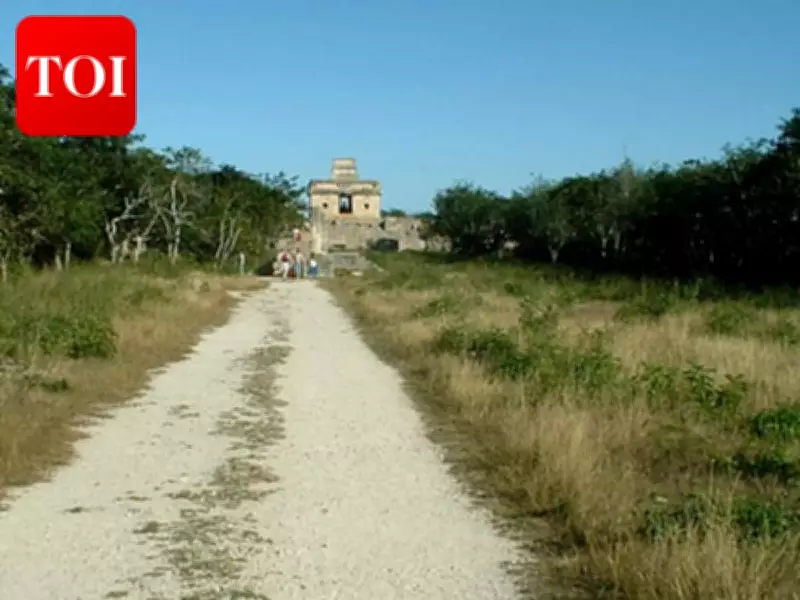
The most surprising aspect for archaeologists was the scale of the road network linking these constructions. Unlike small, random trails, the causeways were well-built, planned highways. Earlier ground surveys struggled to map the area, but now detailed maps suggest that what seemed like isolated settlements were part of a densely populated region. The elevated roads indicate that the Maya expected frequent travel between different places.

Roads of Power and Strategy
This hidden road system challenges the traditional view that jungles separated Maya societies. The roads are situated alongside agricultural terraces, extensive water reservoirs, and fortification walls. This layout suggests the roads served both everyday needs and broader strategic purposes. The wide roads enabled easy access between urban centers, indicating a high degree of organization. The network likely facilitated trade, troop movement, and long-distance communication, while also demonstrating the authority of those who organized the labor.
Integrated Agriculture and Defense
These discoveries have reshaped how historians view Maya survival strategies and resource management. As reported by Brown University, LiDAR data reveals advanced farming, defensive structures, and land transformation. Cities depended on a linked system of agriculture and defense. For instance, a successful city needed access routes, fertile fields, and an efficient water supply to cope with droughts. The data from Guatemala suggests the Maya developed all these features together.
Reevaluating the Ancient Maya World
While the roads do not prove a unified ruling power, they suggest the region was far more interconnected than previously thought. By mapping this network, researchers can see how separate ruins are connected through engineering and culture. Remote sensing now provides evidence of connectivity beyond what ruined walls alone can show. When the tree cover is stripped back, the ruins appear as part of a connected civilization with an elaborate road network.
About the Author: The TOI Science Desk is an inquisitive team of journalists dedicated to curating captivating science news for The Times of India, covering topics from genetics to space exploration.