

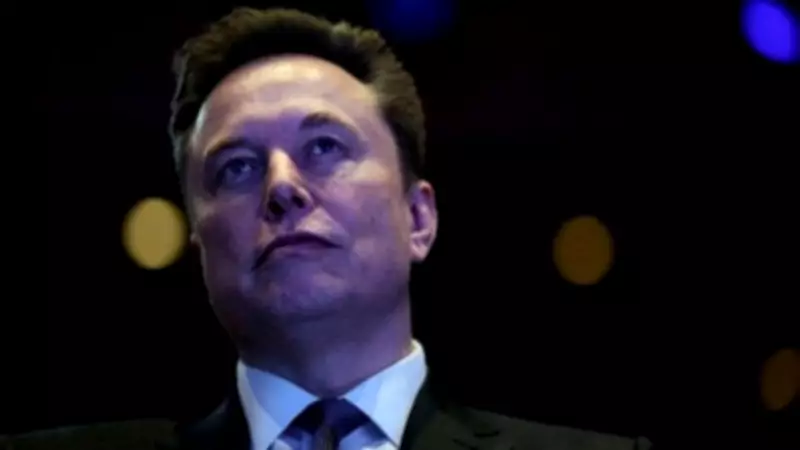
Elon Musk Unveils Vision for Self-Sustaining Lunar Metropolis
In a groundbreaking revelation, tech mogul and SpaceX founder Elon Musk has dropped a significant hint about the company's ambitious plans to establish a self-growing city on the Moon within the next decade. This announcement signals a bold new phase in humanity's quest for space colonization, with Musk positioning SpaceX at the forefront of lunar exploration and settlement.
SpaceX's Decade-Long Timeline for Lunar Expansion
Musk's comments suggest that SpaceX is targeting a remarkably aggressive timeline, aiming to create a functional, expanding lunar habitat in just 10 years. This self-growing city concept implies a settlement capable of supporting human life independently, with infrastructure that can expand autonomously or with minimal Earth-based intervention. The plan likely involves advanced robotics, in-situ resource utilization, and modular construction techniques to build and maintain the city on the Moon's harsh surface.
This initiative represents a major shift from traditional space missions focused on short-term exploration to long-term habitation. By developing a self-sustaining city, SpaceX aims to reduce reliance on Earth for supplies, making lunar living more feasible and cost-effective. The project could leverage technologies from SpaceX's Starship spacecraft, which is designed for deep-space missions, including lunar landings.

Implications for Global Space Race and Economy
The revelation comes amid increasing international competition in space, with countries like China and India also advancing their lunar programs. Musk's plan could accelerate the global space race, pushing other entities to ramp up their efforts in moon colonization. Economically, a self-growing lunar city could open new frontiers for industries such as mining, tourism, and research, potentially creating a multi-trillion-dollar space economy.
From a scientific perspective, a permanent lunar base would enable unprecedented studies of the Moon's geology, the effects of low gravity on human health, and the potential for using lunar resources like water ice for life support and fuel. This could pave the way for further exploration of Mars and beyond, as Musk has often cited the Moon as a stepping stone to interplanetary travel.
Challenges and Feasibility of Musk's Lunar Vision
While Musk's timeline is ambitious, experts note significant challenges, including:
- Developing reliable life-support systems for long-term lunar habitation.
- Ensuring protection from radiation and extreme temperature fluctuations on the Moon.
- Creating sustainable food and water sources without constant resupply from Earth.
- Addressing the high costs and technical risks associated with such a complex project.
Despite these hurdles, Musk's track record with SpaceX—such as revolutionizing rocket reusability and launching the Starlink satellite network—suggests that the company may have the innovation and resources to make strides toward this goal. The plan aligns with Musk's long-stated vision of making humanity a multi-planetary species to ensure survival against existential threats.
As details emerge, the world will be watching closely to see how SpaceX transforms this hint into reality, potentially marking the 2030s as the decade when humans begin to call the Moon home.






