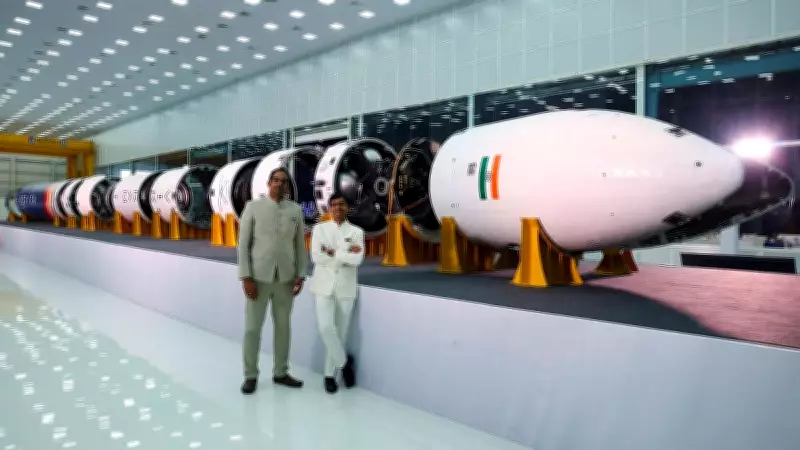
Skyroot Aerospace has announced a launch window for its Vikram-1 rocket, which is set to become India's first privately developed orbital-class launch vehicle. The final lift-off date will be determined after the completion of assembly and testing operations at the launch site, the company confirmed in a statement on July 2, 2026.
Launch window and timeline
The launch window opens in the coming weeks, with Skyroot aiming to conduct the maiden flight from the Satish Dhawan Space Centre in Sriharikota. The company is currently integrating the rocket's stages and performing final checks. The exact date will be announced once all pre-launch activities are verified.
Vikram-1 is a three-stage solid-fuel rocket capable of delivering payloads of up to 300 kilograms to low Earth orbit. It is named after Dr. Vikram Sarabhai, the father of India's space program. The rocket's development has been supported by the Indian Space Research Organisation (ISRO) under its IN-SPACe initiative, which fosters private sector participation in space activities.

Significance for India's space sector
The launch will mark a milestone for India's private space industry, which has grown rapidly since the government opened the sector to private players in 2020. Skyroot, founded in 2018 by former ISRO scientists, is among the first startups to attempt an orbital launch. The company previously conducted a successful suborbital test flight of the Vikram-S rocket in November 2022, carrying three customer payloads.
Skyroot co-founder and CEO Pawan Kumar Chandana said, "We are thrilled to announce the launch window for Vikram-1. This mission will demonstrate our capability to provide reliable and affordable access to space for small satellite operators worldwide."
Technical details and payload
Vikram-1 stands 18 meters tall and has a lift-off mass of approximately 55 tonnes. It uses high-performance carbon composite structures and 3D-printed components to reduce cost and weight. The rocket's first stage, called Kalam-100, generates 200 kN of thrust. The second and third stages are Kalam-50 and Kalam-25, respectively.
The payload for the maiden flight includes a mix of Indian and international small satellites. Skyroot has not disclosed the exact manifest but confirmed that the mission will deploy multiple CubeSats for Earth observation and technology demonstration.
Industry and regulatory context
The launch is being closely watched by the global space community as India emerges as a competitive hub for small satellite launches. Skyroot's success would position it alongside other private launch providers like SpaceX's Falcon 1 (now retired) and Rocket Lab's Electron. The Indian government has allocated $1.8 billion to space initiatives in 2026, including support for private launch vehicles.
ISRO chairman S. Somanath said, "We congratulate Skyroot on reaching this critical milestone. The private sector's involvement is essential for India to increase its share of the global space economy, which is projected to reach $1 trillion by 2030."
Next steps
Skyroot will provide regular updates on the launch readiness. The company also plans to develop a larger rocket, Vikram-2, with a reusable first stage, for medium-lift missions. The upcoming launch window represents a pivotal step toward making India a self-reliant spacefaring nation with a vibrant private ecosystem.