

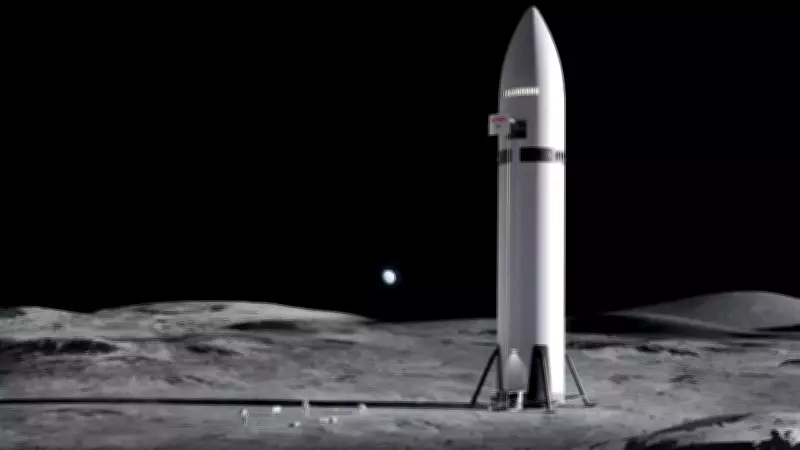
SpaceX's Strategic Pivot: From Mars Dreams to Lunar Reality
In a significant shift for the future of space exploration, billionaire entrepreneur Elon Musk has indicated that his company SpaceX is now prioritizing the Moon over Mars as its primary extraterrestrial focus. The ambitious vision involves constructing a self-growing city on the lunar surface within the next ten years, marking a bold departure from previous long-term plans centered on the Red Planet.
The Practical Realities Driving the Lunar Focus
For years, Mars dominated SpaceX's visionary roadmap, with Musk frequently discussing colonization efforts on the distant planet. However, recent developments suggest a pragmatic recalibration. Building sustainable infrastructure on the Moon presents fewer immediate challenges compared to Mars missions. The Moon's proximity to Earth—approximately 384,400 kilometers away—enables shorter mission durations, more reliable communication links, and significantly faster emergency response capabilities.
These logistical advantages substantially reduce both risk and cost, making lunar development a more achievable near-term objective. Experts analyzing this strategic shift note that it reflects not just technological considerations but also evolving competitive dynamics in the global space arena.

Geopolitical Dimensions of the New Space Race
The renewed focus on lunar exploration coincides with intensified efforts by major spacefaring nations. Both the United States through NASA's Artemis program and China with its Chang'e missions have dramatically accelerated their lunar initiatives, viewing Earth's natural satellite as a strategic stepping stone for deeper space exploration.
Analysts suggest that whichever entity—whether national space agency or private company—establishes permanent infrastructure on the Moon first could potentially shape the trajectory of space activity for generations to come. This geopolitical dimension adds urgency to SpaceX's revised timeline and objectives.
Envisioning a Self-Growing Lunar Metropolis
The concept of a "self-growing city" on the Moon, while sounding like science fiction, is grounded in substantial existing research and technological development. Such a settlement would be designed to expand autonomously using in-situ resources—primarily lunar regolith (surface material)—rather than depending entirely on supplies transported from Earth.
Critical life support systems would need to achieve near-perfect efficiency in recycling air, water, and waste within the closed lunar environment. Successfully developing these sustainable systems would represent a monumental breakthrough with applications extending far beyond the Moon, potentially enabling future human missions throughout the solar system.
Mars Remains the Ultimate Long-Term Destination
Despite this strategic pivot toward lunar development, Elon Musk's fundamental vision of establishing a human presence on Mars remains unchanged. The company acknowledges that Martian colonization presents substantially greater challenges, including much longer travel times measured in months rather than days, increased radiation exposure, and more complex landing procedures.
By first developing and testing sustainable living systems in the relatively accessible lunar environment, SpaceX aims to reduce uncertainties and mitigate risks before attempting permanent settlement on the Red Planet. Musk has consistently argued that humanity must evolve into a multi-planetary species to safeguard against existential threats to life on Earth.
The proposed ten-year timeline for establishing a self-growing lunar city represents an aggressive schedule that would require unprecedented cooperation between government agencies and private sector entities. If successful, this endeavor could fundamentally transform humanity's relationship with space, establishing the Moon not just as a scientific outpost but as a permanent extension of human civilization.






