The paradox of decision-making is a timeless theme explored through the lens of the classic Tamil text 'Thirukkural' and the modern game of poker. Written by Tamil poet and philosopher Thiruvalluvar, the Kural consists of 1,330 short couplets of seven words each, divided into three books on virtue, wealth, and love. It is considered one of the greatest works on ethics and morality, influencing scholars and leaders across social, political, and philosophical spheres. Motivational speaker, author, and diversity champion Bharathi Bhaskar delves into this masterpiece.
The Conversation That Sparked Insight
The journey began with a cautious conversation. Bhaskar was meeting a group of his daughter's Gen Z friends, a generation that guards its privacy differently. He stuck to safe pleasantries until a young man introduced himself as a professional poker player. For a brief moment, Bhaskar tightened his grip on the armrest but maintained a neutral face and listened.
The young man explained that he was exploring other opportunities. Curious, Bhaskar asked what skills he would mention to prospective employers. The poker player replied that poker is about assessing probabilities, making decisions with incomplete information, managing risk, and remaining emotionally steady when outcomes refuse to cooperate. The more Bhaskar thought about it, the more it sounded like life itself.

Judging Decisions by Outcomes
When we look back at our best and worst decisions, we usually judge them through the lens of outcomes. A decision that led to success becomes a good decision, while one that ended badly becomes a poor one. Perhaps our greatest weakness is our discomfort with uncertainty. We admire confidence and reward certainty, and we are suspicious of people who say, 'I am not sure.' Yet those may be among the wisest words a person can utter.
Embracing Uncertainty
Good poker players and good decision-makers share a common trait: they are comfortable with uncertainty. Instead of asking, 'Am I right?', they ask, 'How likely am I to be right?' The experienced player studies probabilities, gathers information, and estimates the choices opponents are likely to make. But even then, he knows something important: there are cards he cannot see.
Life, too, is closer to poker. We rarely know the motives, fears, intentions, and constraints hidden in the minds of others. We make choices with partial information and discover the consequences only later.
The Bet: A Tale of Unpredictable Outcomes
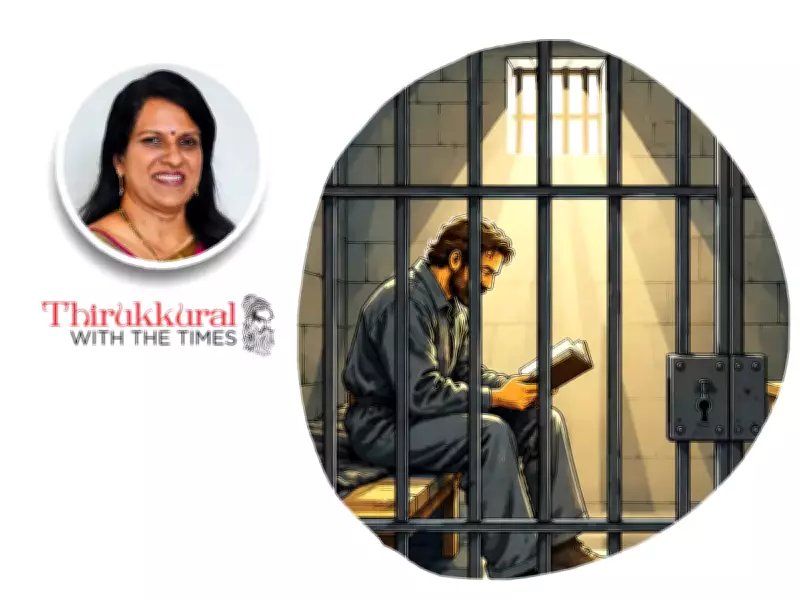
This reminds us of Anton Chekhov's famous story, The Bet. A wealthy banker and a young lawyer made a bet: if the lawyer agreed to be imprisoned for 15 years, the banker would pay him two million roubles. Tempted by a fortune beyond imagination, the lawyer accepted. The years passed, and in solitude, the lawyer immersed himself in books. What began as confinement slowly transformed into liberation. Through literature, philosophy, and reflection, he discovered an inner richness that made wealth seem insignificant. On the eve of his release, he wrote a letter renouncing the money.
The irony was devastating. The banker, ruined by reckless speculation, had planned to murder the lawyer. Entering the prisoner's room, he read the letter and realized the truth: the man behind bars had been free, while the one outside had remained a prisoner. Neither could have predicted that outcome when the bet was made.
Lessons from Thiruvalluvar
Perhaps that is the lesson hidden inside every wager we make in life. Outcomes are never entirely ours to command. Every decision contains forces beyond our vision and control. Thiruvalluvar condemned gambling without reservation, observing that gamblers may win once but lose a hundred times. Yet there remains something to learn from professional gamers. They understand that good decisions do not guarantee good outcomes every time. Luck has a vote, circumstance has a vote, and hidden information has a vote. The only thing fully available to us is the quality of our judgment.
Thiruvalluvar captures this mystery beautifully in Kural 371: 'Aagoozhal Thondrum Asaivinmai; Kaipporul Poegoozhal Thondrum Madi.' On favourable turns of fate, energy seems to arise effortlessly. On unfavourable turns, even enthusiasm fades. Perhaps wisdom lies in accepting that certainty is often an illusion.