

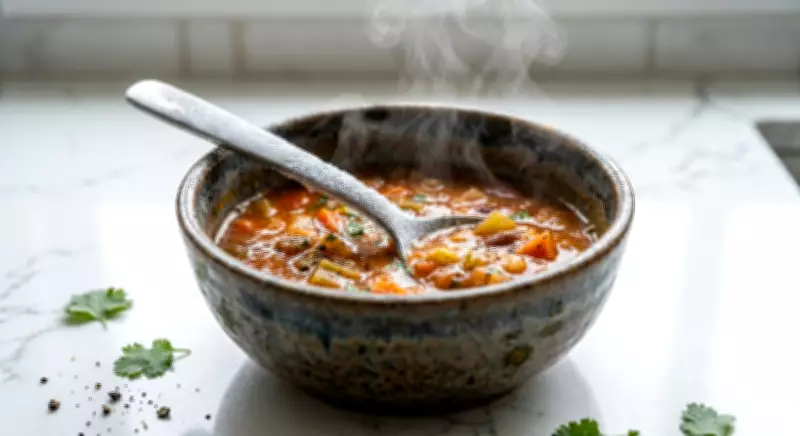
You have likely stood over a pot of soup late at night, wondering if it is safe to place it in the refrigerator while it is still steaming. The short answer is no. However, there is a simple fix that requires no effort, no money, and one item you already own: a steel spoon.
Why Your Food Stays in the Danger Zone Longer Than You Think
Most home cooks are unaware that bacteria multiply most rapidly between 4°C and 60°C, a range known as the danger zone. If you leave a hot pot of sauce or curry on the counter to cool naturally, it can remain in this zone for a surprisingly long time. The warmer your kitchen, the longer the cooling process takes.
Research published in Food Microbiology found that pathogens like Clostridium perfringens can grow rapidly when cooked food spends too long cooling through the 4°C to 60°C range. This explains why food that smells fine can still cause illness the next day.

What Does a Frozen Spoon Actually Do?
Stainless steel is an excellent conductor of heat. A spoon placed in your freezer absorbs and retains cold. When added to a hot liquid such as soup, sauce, or custard, it pulls heat out of the food directly, cooling it faster. This provides a shortcut out of the danger zone. The spoon does the work of removing heat, rather than letting the food cool slowly to a safe temperature.
Faster cooling also benefits delicate foods like chocolate ganache or vanilla custard, preventing overcooking and the dreaded lumpy texture.
It's Not Magic, But It's Genuinely Useful
To be clear, a frozen spoon is no substitute for your refrigerator. It is best used as a bridge to accelerate the cooling phase before proper storage begins. It works well for small batches of soup or a single pan of sauce. For large batches of chili, consider using shallow containers or an ice bath in combination with the spoon. Controlling temperature is key to slowing microbial growth and enzyme activity, both major causes of spoilage. A frozen spoon fits this logic perfectly.
Material matters: stick with stainless steel. Research published in the European Food Safety Authority journal indicates that aluminum can migrate into food, especially in acidic environments like tomato sauce, citrus, or vinegar-based dishes.
The Kitchen Habit Worth Adopting
It is refreshing to learn a food safety tip that does not require a gadget, subscription, or trip to a specialty store—just a spoon and some ice. Next time you finish cooking, toss a spoon in the freezer before you sit down to eat. By the time you are done, it will be ready to do its job. You will enjoy less waste, safer food, and better texture, all for the cost of absolutely nothing.






