

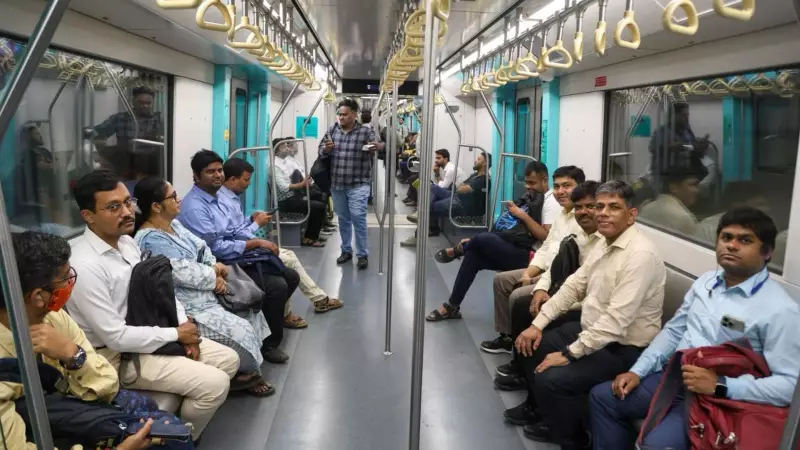
For over three months, commuters on Mumbai's prestigious and fully underground Aqua Metro, also known as Line 3 (Colaba-Bandra-SEEPZ), have been traveling through a digital void. A deep-seated stalemate between major telecom service providers and the Mumbai Metro Rail Corporation Limited (MMRCL) over pricing has resulted in a near-total mobile network blackout across the line's subterranean stations and tunnels, raising significant inconvenience and safety concerns among daily passengers.
The Root of the Connectivity Crisis
The core of the dispute lies with the in-building solutions (IBS) infrastructure installed 20 feet below ground. MMRCL awarded a 12-year contract in 2023 to ACES India Private Limited, a subsidiary of a Saudi-based company, to set up neutral, 5G-ready telecom infrastructure. However, telecom operators, including giants like Jio and Airtel, have refused to connect to this system, labeling the rates demanded by ACES as "monopolistic and extortionate."
An official from the Cellular Operators’ Association of India (COAI), Lt Gen Dr SP Kochhar, stated the gap in perceived costs runs into several millions of rupees. A telecom source claimed ACES's capital expenditure is quoted at Rs 118 crore, while internal telco estimates peg it at a mere Rs 30 crore. The monthly charges per station are also a major point of contention, with MMRCL's vendor initially asking for Rs 13 lakh, later reduced to Rs 5.5 lakh, against the telcos' calculation of Rs 39,000.

A Clash of Perspectives: Utility vs. Revenue
The standoff highlights a fundamental difference in how the two sides view mobile connectivity. Telecom operators argue that providing network coverage in public transit systems is an essential utility and a Right-of-Way obligation, not a revenue stream. "Across the world, telecom operators do not pay recurring fees for providing mobile signals meant for public use," emphasized Kochhar.
MMRCL, however, defends the model. An official stated that the rates account for infrastructure investment, maintenance, and committed charges to the metro corporation. The contract with ACES was noted for generating the highest licence fee per station in India—approximately 2.5 times more than any other metro line. Director Ashwini Bhide had earlier highlighted that such non-fare box revenue is critical for keeping passenger fares low and ensuring operational viability.
Commuters Bear the Brunt, Emergency Fears Rise
Currently, only Vodafone Idea (Vi) and BSNL offer sporadic connectivity in restricted sections. For most users, the blackout is absolute between Worli and Colaba. Commuters like Shahid Shaikh, a Jio user, express frustration and worry. "In case of emergencies, I am completely cut off from my loved ones... till I exit the station," he said, noting his hour-long round trip goes offline.
While some joke about the line being a zone for 'digital detox,' the serious implications for passenger safety are undeniable. The telcos have reportedly been waiting for over eight months for MMRCL's permission to install their own infrastructure along the line, citing the Telecommunications Act, 2023, which mandates Right of Way in public places.
Adding a layer of complexity, the MMRCL official pointed out that the contract with ACES was finalized before new telecom rules came into force in January 2025, creating ambiguity. A similar dispute is unfolding at the upcoming Navi Mumbai International Airport (NMIA), and officials warn that other underground projects in Mumbai could face identical issues.
The path to resolution remains unclear. A knowledgeable source suggested a potential middle ground: stakeholders must agree on rates viable at current footfall, with provisions to scale up as passenger numbers stabilize. Until then, Mumbai's Aqua Metro commuters continue their journey in silence, waiting for a signal to break through the stalemate.






