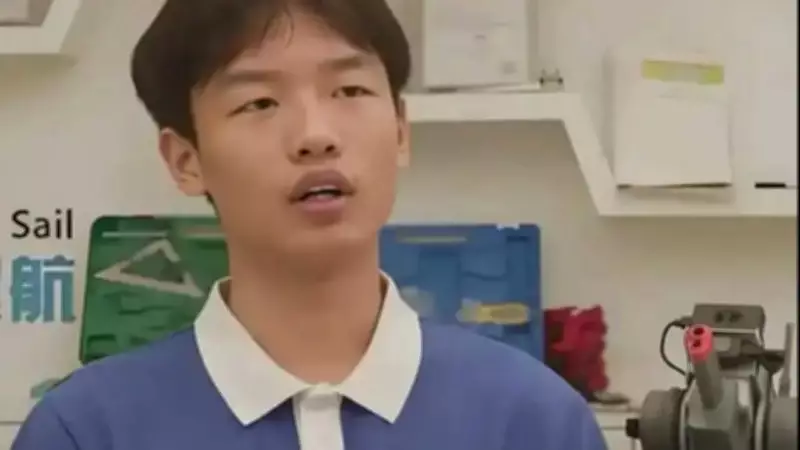
At an age when most students are busy with exams, university applications, and the usual worries of late adolescence, one teenager in southern China found himself leading a small technology company. He still wore his school uniform, attended classes, and prepared for higher education, yet outside school, he was negotiating with suppliers, testing drone prototypes, and trying to keep a fledgling business alive. This contrast drew attention and eventually earned him the nickname "CEO in a school uniform." However, behind the label lies a far less polished story, one involving waiting tables, delivering takeaway meals, and making tough choices long before success became visible.
Journey of a 19-Year-Old CEO in a School Uniform
The inventor, Wei Siyuan, was born in Shenzhen, a city synonymous with China's technological progress. His parents were working class, and his early interest was not fueled by paid classes or special connections, but by observing his surroundings, as reported by the South China Morning Post. He often visited his mother at work, admiring the machinery, tools, and devices used in manufacturing. Dismantling items, putting pieces together, and assembling his own products captivated him, and he enjoyed these activities throughout his childhood.
A significant event in his life occurred during primary school when he met a teacher who sparked his interest in robotics. This hobby evolved into an activity that consumed an increasing amount of his time.

How Wei Siyuan Used Robotics Competitions to Shape His Future
By junior secondary school, Wei had met classmates with similar interests. Together, they participated in robotics competitions, spending countless hours refining designs and solving engineering problems. One of the most notable experiences was taking part in RoboMaster, China's well-known student robotics competition. Their team performed strongly, securing second place in their category, an achievement that boosted their confidence that their ideas could transcend school projects.
For many students, competitions end with certificates and photos. Wei and his friends saw things differently. They began discussing whether they could turn their technical skills into a business. Wei quietly registered a company while still a teenager, without informing his parents beforehand. They worried that entrepreneurship would distract him from his education and create unnecessary risks at such a young age. Still, he continued.
The company focused on unmanned aerial vehicles and AI-powered technology products. With limited financial resources, the founders designed and assembled prototypes themselves. Manufacturing was outsourced only after they had working versions of their products.
Wei Siyuan Funded His Start-up by Waiting Tables and Delivering Food
Wei's business survived its earliest months through part-time work. After becoming legally eligible to work, he took jobs wherever he could find them. He waited tables in a hotpot restaurant and delivered food orders around the city. The income covered rent, electricity bills, and other expenses linked to the company. These jobs existed alongside his studies and the growing demands of running a business. Some days were spent attending classes, while others involved long working hours before returning to technical projects late at night. Yet the arrangement allowed the company to continue operating during a period when external funding was scarce.
The First Drone and a Breakthrough in Overseas Markets
The company eventually introduced its first consumer drone, a product that combined modern technology with design elements inspired by traditional Chinese aesthetics. Around this time, Wei's mother, who worked in foreign trade, began helping the young founders expand beyond China. Overseas online stores were set up, opening access to customers in markets including Europe and Australia. Their first significant earnings reportedly amounted to around 50,000 yuan. Rather than spending the money on himself, Wei used the revenue to pay employees and continue developing the business.
By the time he completed secondary school, the company had expanded to a team of 11 people. Some employees were considerably older than the teenage founder, including staff members in their thirties.

Giving Back to the People He Noticed Every Day
As the business grew, Wei turned his attention to something far removed from drones and artificial intelligence. At his former school, he had often seen sanitation workers resting outdoors with few facilities available to them. Heating food was difficult, and there was little dedicated space where they could take breaks comfortably. After earning more from the company, he donated 100,000 yuan to help create a rest area for those workers.
A Second Company and an AI Sports Product
Wei has not stopped with drones. He recently launched another company and introduced an AI-powered system designed for skiing enthusiasts. The technology analyzes a skier's movements and offers coaching feedback based on those actions. The product first gained traction overseas, where thousands of units were reportedly sold before efforts shifted towards expanding within China. The project reflects a broader trend among young Chinese entrepreneurs who are experimenting with artificial intelligence in specialized consumer products rather than focusing solely on traditional software.
As reported by the SCMP, among the business leaders Wei admires most is Lei Jun. His admiration once led him to wait outside a Xiaomi automobile research center in the rain, hoping for a chance encounter with the entrepreneur. The meeting never happened, though Wei has said he still hopes to speak with him one day.