

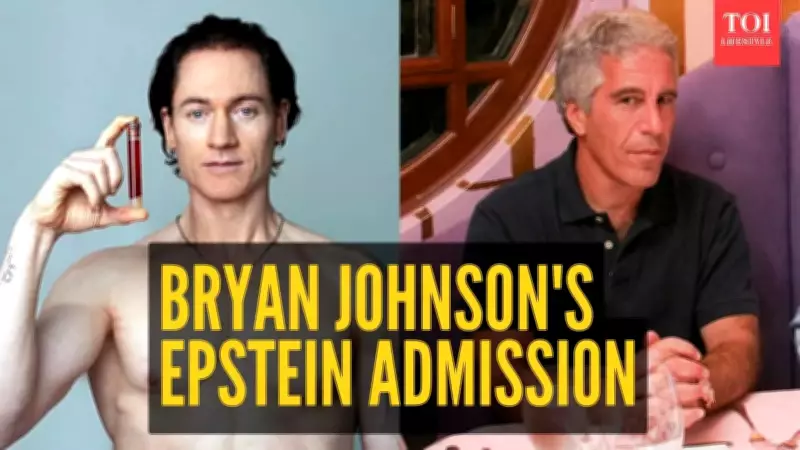
Tech Billionaire's Epstein Revelation Ignites Social Media Storm
Bryan Johnson, the prominent tech entrepreneur celebrated for his groundbreaking longevity research and brain-interface ventures, has found himself at the center of a heated social media controversy. The billionaire recently disclosed a previously unknown encounter with the late convicted sex offender Jeffrey Epstein, sparking intense debate across digital platforms.
The Zoom Call That Changed Everything
In a detailed series of posts on X (formerly Twitter), Johnson recounted meeting Epstein approximately eight years ago through a brief ten-minute Zoom call. The introduction came during the formative stages of his neural-interface startup Kernel, facilitated by a mutual contact who suggested Epstein had neuroscience connections at MIT.
"After a ten minute video call I immediately called the person who put us in contact and told him that Epstein seemed like a very dark person," Johnson wrote in his viral thread. "I felt sick to my stomach. I also told him I that never wanted to speak to him again."

The tech mogul emphasized that his reaction was purely instinctual, occurring long before Epstein's criminal activities became widely known to the public. Johnson described experiencing a visceral discomfort during their interaction, stating he sensed something was profoundly wrong despite having no prior knowledge of Epstein's background.
Internet Erupts with Polarized Reactions
The disclosure triggered immediate and divided responses across social media platforms. While some users praised Johnson's intuitive judgment and transparency, others expressed deep skepticism about his narrative timing and consistency.
Several critics presented alleged evidence suggesting Johnson had attempted to arrange additional meetings with Epstein even after his conviction. One particularly vocal commenter accused: "You're 100% lying. Here's you trying to meet up with him after he was a convicted sex offender."
The controversy extended beyond X to platforms like Reddit, where discussions highlighted:
- Questions about why Johnson didn't conduct basic background checks
- Debates about whether his explanation constituted crisis public relations
- Arguments about how widespread Epstein's network truly was among elite circles
- Discussions about the credibility of distancing oneself only after being named in released files
Broader Context of Epstein Files and Elite Networks
The resurgence of Epstein-related documents has reignited global scrutiny of powerful networks that connected billionaires, tech founders, politicians, and celebrities. These releases have prompted serious questions about influence networks and due diligence practices within elite circles.
Johnson's case is particularly noteworthy given his public profile as a biohacker pursuing radical anti-aging solutions through his Blueprint project. His acknowledgment comes amid similar revelations about other high-profile figures, including Tesla CEO Elon Musk, who has also faced questions about alleged Epstein connections.
Analysts emphasize that mere appearance in Epstein records doesn't imply wrongdoing but does raise important questions about:
- How introductions are facilitated within elite networks
- The responsibility of public figures to conduct due diligence
- The challenges of navigating professional networks when criminal backgrounds aren't immediately apparent
- The ongoing reckoning with accountability in powerful circles
Intuition Versus Reputation Management in Tech Culture
Johnson's narrative heavily relies on the concept of instinct rather than prior knowledge, an approach that has drawn both sympathy and criticism. His admission that he had no "algorithm" to check if someone was a registered sex offender highlights how tech culture sometimes prioritizes network access over thorough vetting.
The episode reveals the complex challenges high-profile entrepreneurs face when their names surface in controversial contexts. Johnson's proactive disclosure appears to be a strategic effort to control the narrative before others could frame it differently, demonstrating how digital archives and social platforms are reshaping public accountability.

This controversy continues to evolve as more details emerge about Epstein's extensive network and the various professionals who interacted with him before his criminal activities became public knowledge. The discussion extends beyond Johnson specifically to broader questions about ethics, intuition, and responsibility within Silicon Valley and global elite networks.





