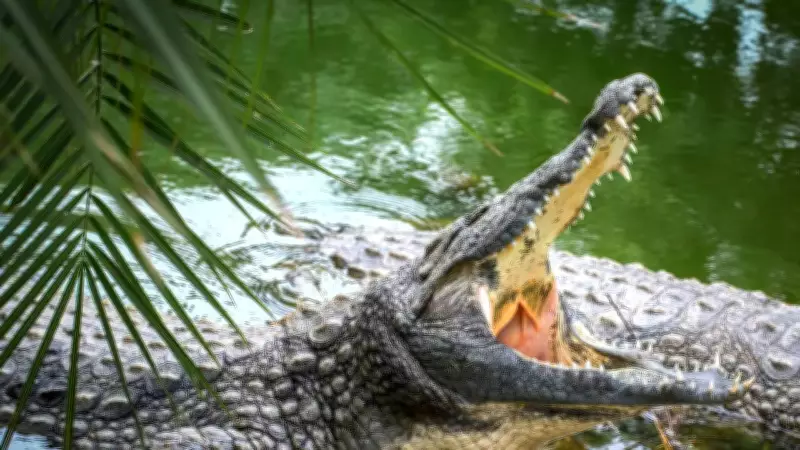
Crocodiles are formidable aquatic predators, but they are not entirely safe from other animals. Some large snakes possess the strength to attack, constrict, and consume a crocodile. This typically occurs in wetland and forested regions where both species overlap. These serpents use their powerful bodies to overpower crocodiles in a struggle for survival. Here are five giant snakes capable of eating a crocodile.
The Green Anaconda
The green anaconda is the heaviest snake in the world, inhabiting the swamps and marshes of South America. These constrictors are exceptionally skilled at capturing aquatic prey. They wrap their muscular bodies around the animal, drag it into the water, and squeeze until it suffocates. Anacondas have been known to prey on caimans, which are close relatives of crocodiles.
The Reticulated Python
The reticulated python is the longest snake in the world, found in the rainforests and rivers of Southeast Asia. These stealthy hunters can ambush a crocodile while it drinks at the water's edge. They bite the reptile and immediately coil around it, tightening their grip with each exhale until the prey dies from cardiac arrest or asphyxiation.

The Australian Scrub Python
The Australian scrub python is a large constrictor native to Australia. It is an adept climber that often ambushes birds and mammals, but it also feeds on freshwater crocodiles. This snake can open its jaws remarkably wide to swallow prey larger than its head, thanks to its highly flexible skull.
The Burmese Python
The Burmese python is an invasive species in the Florida Everglades, where it preys on alligators and crocodiles. These snakes are masters of camouflage, hiding in vegetation before striking. They use constriction to subdue their prey, and their powerful coils can overcome even the armored hide of a crocodilian.
How a Snake Eats a Crocodile
Snakes overcome a crocodile's armored plates by coiling around the body and squeezing. Each time the crocodile exhales, the snake tightens its grip, eventually cutting off blood flow to the brain and heart. The crocodile dies quickly from circulatory collapse. Contrary to popular belief, snakes do not unhinge their jaws; instead, their lower jaw is loosely connected by elastic ligaments, allowing them to stretch their mouth around large prey. They then slowly work their jaws over the crocodile's body, swallowing it whole. These snakes are among nature's most powerful predators, demonstrating that even apex reptiles can become prey.