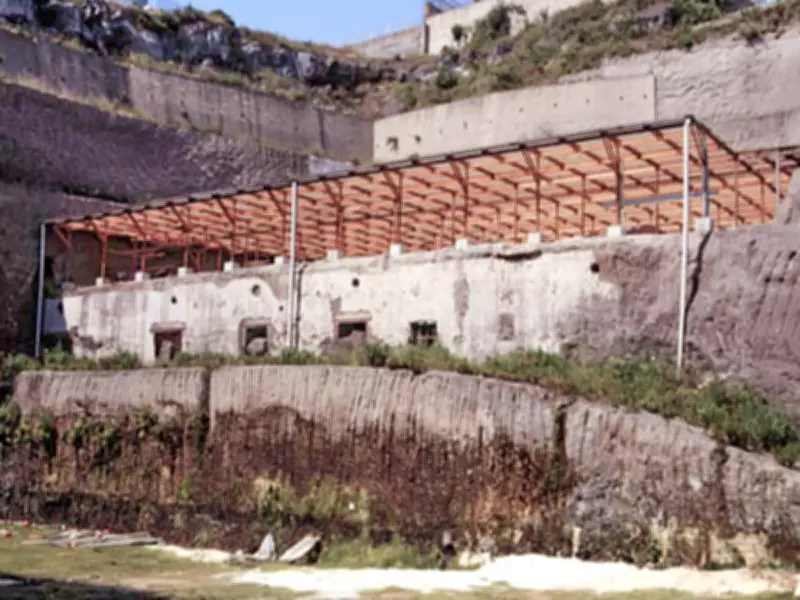
In 1750, workers digging near Herculaneum made a groundbreaking discovery. As they cut through layers of volcanic sediment and sandstone, they stumbled upon the remains of a Roman villa. Archaeological accounts reveal that the excavation uncovered an ancient villa rather than a deliberately sought library. The house had been buried under tens of meters of volcanic material, which kept it hidden for about 1,700 years. No one expected to find an elegant seaside villa with rooms full of books; its discovery was accidental, the result of routine digging during 18th-century excavations. The location, later referred to as the Villa of the Papyri, resulted from digging for a normal purpose in volcanic earth and exposed the world that had been encased since AD 79.
How Did Fire Save the Books?
The villa's scrolls survived the eruption, but only because of carbonization. A study in Scientific Reports states that more than 800 carbonized scrolls survived the AD 79 eruption of Vesuvius. The extreme heat carbonized the papyri, turning them black and sealing them against biological decay. This paradox lies at the heart of the significance of this site's history. Carbonization was both a rescue and a curse. It protected the scrolls from decay caused by natural causes; however, it made them extremely fragile and hard to remove. The ash's heat did not destroy the scrolls outright; it made them durable objects that could last for centuries. The eruption destroyed the villa as a residence, but in preserving its library, it left us one of the few surviving private collections from antiquity.
A Villa Fit for an Elite Library
The context of the find explains why such a huge book collection was discovered there. Discussions on archaeology often point to the Villa of the Papyri as an estate of aristocratic occupants by the sea. Many scholars associate the villa with Lucius Calpurnius Piso Caesoninus, Julius Caesar's father-in-law. Although this connection is disputable, the elite setting of the house is clear. A privileged Roman house was an ideal space where literature, philosophy, and high status could come together. It was a private library shaped by the owner's interests and knowledge. The property was vast and wealthy enough to house an intellectual library of the highest quality, offering a fascinating glimpse of how Roman elites collected books.

What Did the Scrolls Contain?
The library's contents make this site a landmark for classicists. An article published in the journal PLOS One states that many of the preserved works include philosophical writings, such as those of Philodemus of Gadara, an Epicurean author of the 1st century BCE. The named authors make the house more than a curiosity; they make it an essential source for Greek and Roman thought. Since the scrolls contain the works of philosophers, they are clear evidence of what a high-end Roman household would have chosen to read. Many libraries belonging to private individuals from the past disappeared without a trace, yet these were preserved as blackened rolls. The Villa of the Papyri stands distinct because it combines the physical and intellectual world within one location.
The Long and Arduous Rescue of an Encased Library
The toughest part of the tale is that survival did not provide easy access. The scrolls survived; however, they were damaged, burned, and fragile. It was an archaeological enigma: completely authentic, but extremely difficult to understand. The process of turning these scorched objects into readable text has taken centuries of research and patience. Today, Herculaneum papyri remain a major focus of study because they combine loss and recovery. New imaging techniques let scholars study unopened scrolls without unrolling them, allowing the library to keep revealing new details. Nearly 2,000 years after the volcanic eruption, the blackened scrolls continue to speak, changing the way we see the ancient world.