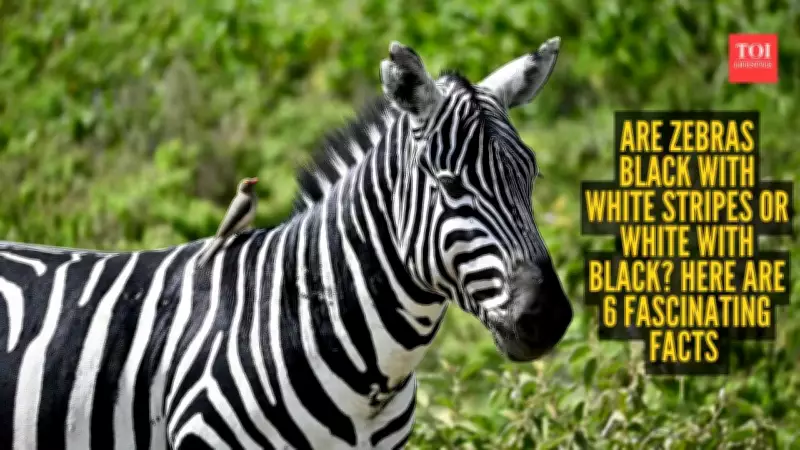
There's a good chance you've known what a zebra looks like since childhood. Black-and-white stripes. Lives in Africa. Looks a bit like a horse. And that's where most people's knowledge ends. Maybe that's because zebras have always lived in the shadow of flashier animals. Lions are the kings of the jungle, elephants are the gentle giants, and cheetahs are built for speed. Zebras? They're usually just... there, standing in the background. But the more scientists study them, the more surprising they become. Their stripes aren't random. Their social lives are surprisingly complex. And despite their calm appearance, they're much tougher than many people realize. In short, zebras are far more interesting than they get credit for. Here are six facts that may help you see them in a different light.
No two zebras wear the same stripes
A herd of zebras standing together can look almost identical. To another zebra, though, each one is instantly recognizable. That's because every zebra has its own stripe pattern. No two are exactly alike. Scientists often compare them to fingerprints because the markings help identify individual animals, while mothers use them to distinguish their young from those of other mothers in the midst of a busy herd. So, the next time you see a group of zebras and think they all look the same, remember: the zebras would probably disagree.
They're technically black with white stripes
This is one of those animal facts people love arguing about. Are zebras white with black stripes or black with white stripes? Scientists say they're black animals with white stripes. The skin underneath their fur is black, and the white sections form in areas where pigment isn't produced during hair growth. It's a tiny detail in the grand scheme of things, but somehow it's also one of the most satisfying zebra facts out there.

Their stripes may be more practical than pretty
Scientists have spent decades trying to figure out why zebras evolved stripes. Camouflage? Temperature control? Social signalling? All of these ideas have been explored. But one explanation has gained a lot of attention over the years: insects. Research suggests biting flies struggle to land on striped surfaces because the patterns confuse their vision. The stripes may not be the only reason zebras survive so well, but they could help make life a little less irritating. Which, honestly, is a pretty smart evolutionary strategy.
They can outrun trouble when they need to
Zebras don't exactly look built for speed. Most of the time, they're grazing, wandering around, or standing still with the rest of the herd. But appearances can be deceiving. When danger shows up, zebras can sprint at speeds of around 65 kilometers per hour. They also zigzag while running, making it harder for predators to predict their movements. For an animal that's hunted by lions, hyenas, and wild dogs, knowing when to run – and how to run – is a survival skill.
Zebras are surprisingly social
A zebra on its own is a rare sight. They prefer company and spend most of their lives in family groups or larger herds. They communicate through sounds, facial expressions, body posture, and even ear movements. Some pairs groom each other by gently nibbling around the neck and shoulders, strengthening social bonds in the process. It's easy to think of zebras as simple grazing animals, but their social lives are much richer than they appear at first glance.
Don't mistake them for gentle horses
This is probably the biggest misconception about zebras. Because they look similar to horses, people often assume they must behave like them, too. Not quite. Zebras are wild animals, and they can be fiercely defensive. They bite, kick, and fight back when threatened. In fact, predators are careful around adult zebras because a powerful kick can cause serious injury.