

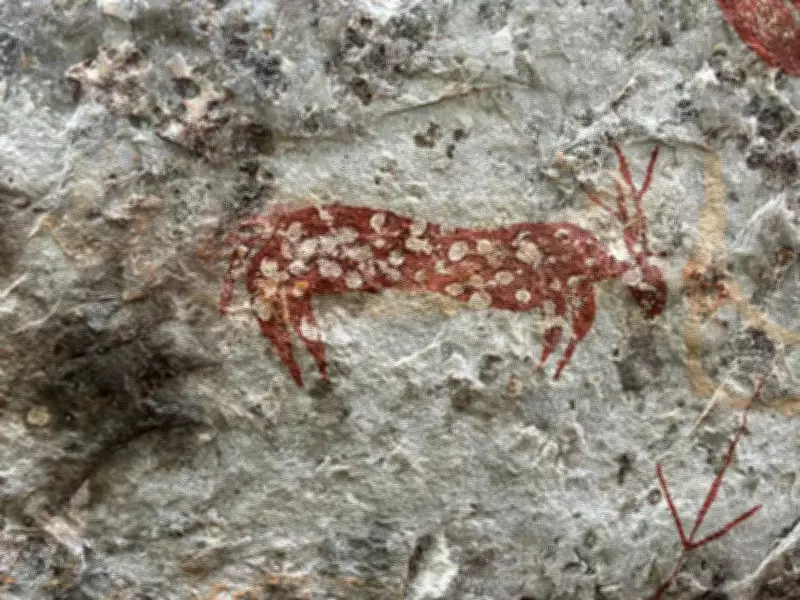
An extensive epigraphical survey conducted by the epigraphy branch of the Archaeological Survey of India (ASI) in the Nallamala tiger reserve has brought to light a rich collection of inscriptions dating back 3,500 years, shedding new light on the region’s political, cultural and linguistic history. Adding another dimension to the discoveries, the ASI team identified ancient rock art near Ālatam inside the Nallamala tiger reserve forest, beside the Krishna river. The rock shelter paintings, featuring early historic and megalithic art forms, have been dated to around 1500 BCE, indicating the presence of prehistoric human activity in the region. Some of them are 500 to 1,400 years old.
The adventurous three-day survey in the forest area and Yerragondapalem region uncovered inscriptions dating from the 2nd century CE to the 16th century CE belonging to several prominent dynasties, including the Satavahanas, Eastern Chalukyas, Kalyani Chalukyas, Potapi Cholas, Kakatiyas, Reddy rulers and the Vijayanagara empire.
ASI director (epigraphy-Mysuru), K Munirathnam Reddy, said that their teams documented and copied 25 inscriptions during the survey, covering a wide historical period from the early centuries of the Common Era to the medieval period. “We copied eight inscriptions from villages including Gangaram Penta, Meetota, Palita, Ponnalabavi and Jallapadugu on day one. These inscriptions, written mainly in Telugu, date from the 7th to the 16th centuries CE,” he said. He said that the team documented 10 inscriptions belonging to the Kalyani Chalukya, Potapi Chola, Kakatiya and Vijayanagara periods on Friday.

The records were found in Telugu and Kannada scripts and provide valuable information about the administration, social life and cultural developments of those periods. He explained that seven more inscriptions were copied, including rare Satavahana records written in Prakrit language and Brahmi script on the final day of their survey. The Satavahana inscriptions are considered significant as they provide evidence about one of the earliest ruling dynasties of the Deccan region.
The survey aims to explore the hidden historical treasures of the Nallamala forest, a region known for its ecological richness and archaeological importance. The ASI team expressed gratitude to the Government of India, state government and Deputy Chief Minister K Pawan Kalyan for their support and assistance in carrying out the survey. The findings are expected to provide fresh insights into the historical evolution of the Nallamala region, which remained an important cultural zone through several dynastic periods.






