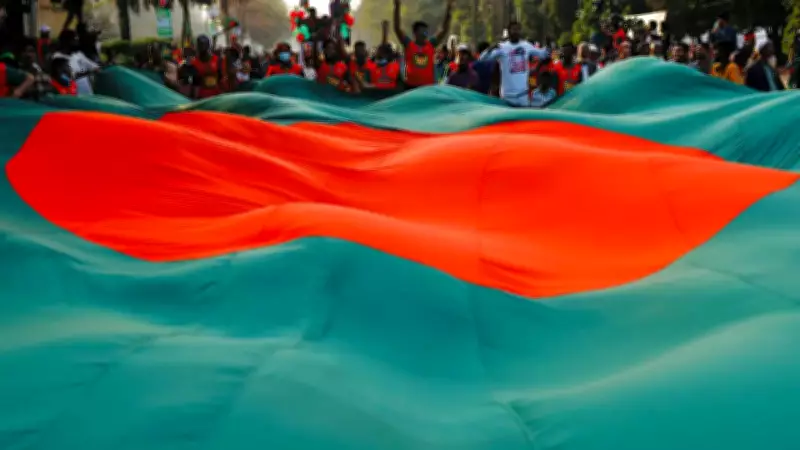
DHAKA: The Bangladesh Nationalist Party (BNP), led by Prime Minister Tarique Rahman, stated on Saturday that future Bangladesh-India relations would largely depend on the renewal or conclusion of the Ganges water-sharing agreement, emphasizing that a short-term deal would be insufficient.
BNP's Stance on Water Treaty
“This treaty must be indefinite and remain effective until replaced by a future agreement,” said BNP Secretary General and Minister for Local Government, Rural Development and Cooperatives Mirza Fakhrul Islam Alamgir while addressing a BNP discussion marking Historic Farakka Day. He claimed that India had built one dam after another on 54 common rivers flowing into Bangladesh without adhering to international laws and conventions, disrupting their natural flow.
“India’s unilateral withdrawal of water in its favour has become a threat to Bangladesh’s existence. Signs of the country turning into a barren wasteland are already emerging,” he added.

Current Treaty Status
The Ganges Water Treaty, signed on December 12, 1996, for a period of 30 years, expires this year, but discussions on its revision or renewal have not yet begun. Bangladesh and India share 54 rivers, including the Ganga or Ganges. To address related issues, the two countries operate a bilateral mechanism known as the Joint Rivers Commission.
Opposition Leader's Remarks on Teesta
Meanwhile, Opposition Leader in Parliament and Jamaat-e-Islami’s Ameer Shafiqur Rahman said people were tired of promises over the Teesta Master Plan and wanted concrete action. “It is not enough to chant slogans like ‘Jago Bahe, Teesta Bachao’ only before elections. The people living along the Teesta are now awakened and want their legitimate demands fulfilled,” he said at a civic gathering at Rangpur Shilpakala Auditorium on Friday evening.
He added that implementation of the Teesta Master Plan would positively impact the lives and livelihoods of nearly 25 million people in northern Bangladesh.