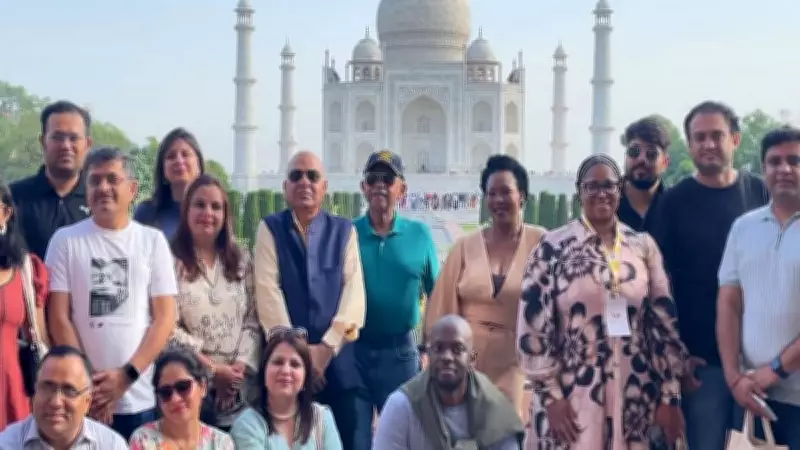
BRICS Delegates Tour Iconic Monuments in Agra
Delegates from BRICS nations visited the Taj Mahal and Agra Fort on Saturday, spending approximately one and a half hours at the iconic 17th-century marble mausoleum. The visit was conducted under tight security arrangements, with the delegates participating in a photo session while exploring the UNESCO World Heritage site.
Details of the Visit
The delegation, comprising representatives from Brazil, Russia, India, China, and South Africa, arrived at the Taj Mahal complex in the morning. According to officials, the group was given a guided tour of the monument, including its main dome, gardens, and reflecting pools. The delegates also took time to capture photographs against the backdrop of the white marble structure.
Following the Taj Mahal visit, the delegates proceeded to the Agra Fort, another UNESCO World Heritage site located about 2.5 kilometers away. The fort, built primarily between 1565 and 1573 under Emperor Akbar, offers a glimpse into Mughal architecture and history.

Significance of the BRICS Visit
The visit is part of a broader BRICS engagement program aimed at fostering cultural exchange and strengthening ties among member nations. A spokesperson for the Ministry of External Affairs stated, "The tour of Agra's heritage sites provides delegates with an opportunity to appreciate India's rich cultural history and promotes people-to-people connections within the BRICS framework."
Over 40 delegates participated in the excursion, which was organized by the Indian government in coordination with local authorities. Security measures included a multi-layered deployment of police and paramilitary forces, with snipers positioned at key vantage points.
Impact on Local Tourism
Local tourism officials expressed optimism that the high-profile visit would boost international interest in Agra's monuments. "Having BRICS delegates experience the Taj Mahal firsthand sends a positive message to global travelers," said a senior official from the Uttar Pradesh Tourism Department. "We hope this leads to increased tourist arrivals from BRICS countries."
The visit also highlighted ongoing conservation efforts at the Taj Mahal, which has faced challenges from pollution and environmental degradation. The Archaeological Survey of India has implemented measures such as restricting vehicle emissions and using mud packs to clean the marble surface.