

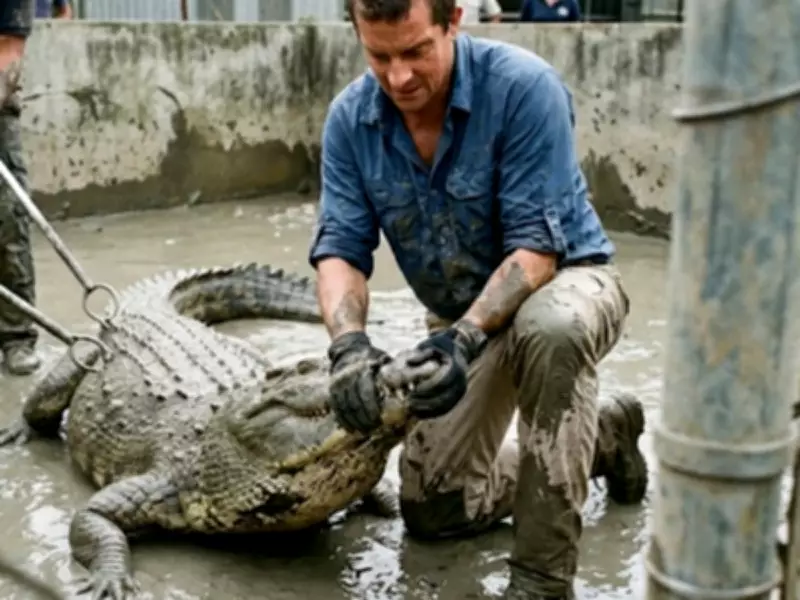
In the wild, animals often possess an innate homing instinct that guides them across vast distances back to their birthplace. While this internal GPS is a marvel of nature, it poses a challenge for conservationists attempting to relocate animals for population recovery. However, a fascinating discovery in Bangladesh's mangrove forests suggests that captive-bred saltwater crocodiles may lack this instinct, offering a new strategy to revive declining populations.
The Internal Compass Disrupted
In the Sundarbans, a team led by behavioral scientist Ru Somaweera from Murdoch University tested the homing abilities of saltwater crocodiles. Bangladesh's crocodile population has struggled despite legal protections since the 1970s, with only around 140 adults remaining in the wild. Past efforts to release hatchlings failed due to high mortality, while releasing adult captive-bred animals risked them returning to their pens.
The study, published in Wildlife Research, tracked five mature crocodiles with satellite tags. Three females had spent up to 22 years in captivity, one was a wild local, and a male named Jongra was moved 130 kilometers from his territory. Results showed that captive-bred crocodiles did not attempt to return to their breeding facilities. Instead, they settled into smaller, stable home ranges, navigating tides and hunting in the mangroves as if born there. This suggests captive breeding facilities can serve as training grounds, potentially revitalizing crocodile populations by overcoming relocation challenges.

Jongra's Endless Journey
While captive-bred females adapted quickly, the wild crocodile Jongra exhibited strong homing behavior. Immediately after release, he began a relentless journey back to his original territory, traveling over 30 kilometers in a single day. Although he did not reach his destination during the study, his direct route highlighted why relocating wild crocodiles is difficult—they cannot accept a new home. This contrast indicates that wild crocodiles are territorial, while captive-raised individuals are blank slates ready to adapt. This finding could change how apex predators are managed in tropical environments, reducing hatchling mortality and avoiding homing issues.
A New Conservation Blueprint
The research extends beyond crocodiles, offering insights into animal perception and relocation. Similar studies in the Journal of Applied Ecology have explored soft release programs, where animals acclimate to pens in the wild before full release, reducing homing instincts. Combining these data allows wildlife managers to make more informed release decisions. In the Sundarbans, captive breeding facilities are not just storage pens but training grounds for future forest guardians. The success of captive-raised females shows that they do not need years of wilderness experience to thrive; a secure environment provides the strength to conquer new areas and stay. For Bangladesh's saltwater crocodiles, improving release methods is crucial for full recovery, potentially allowing these ancient giants to reclaim the mangroves they have called home for millions of years.






