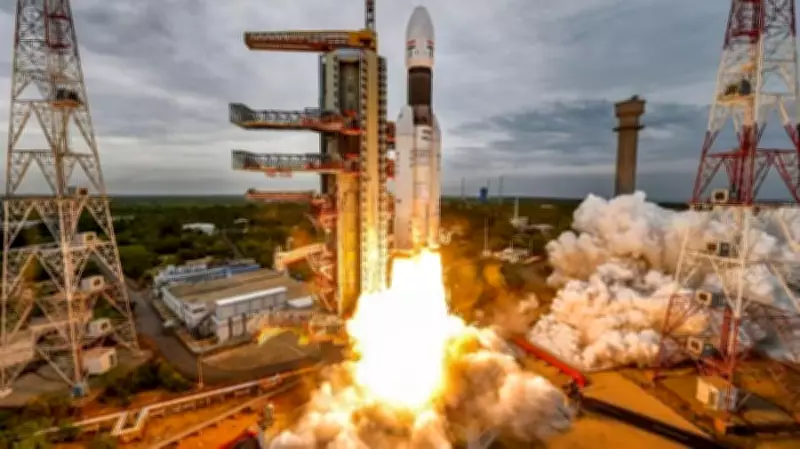
Chandrayaan-3 Findings Connect Landing Site to Lunar Meteorite
New analysis of soil samples from the Chandrayaan-3 landing site has established a direct compositional link to the first known lunar meteorite, according to a study published on July 3, 2026. The research, conducted by scientists from the Indian Space Research Organisation (ISRO) and partner institutions, examined regolith at the Shiv Shakti Station and found it to be a mixture of materials from different layers of the Moon's crust.
Key Compositional Match
The study, led by Dr. Anil Kumar of the Physical Research Laboratory in Ahmedabad, compared elemental and mineralogical data from the Pragyan rover with samples of the lunar meteorite known as NWA 11788, discovered in Northwest Africa in 2016. The analysis showed that the soil at Shiv Shakti contains a blend of highland and mare basaltic components, matching the meteorite's unique composition. "This is the first time we have an in-situ measurement that directly ties a landing site to a known meteorite," Kumar said.
Implications for Lunar Geology
The findings suggest that the area around Shiv Shakti experienced complex geological processes, including impact events that excavated deep crustal materials. The meteorite NWA 11788 is classified as a mingled breccia, containing fragments of both anorthositic highland rocks and basaltic mare rocks. The Chandrayaan-3 analysis detected similar mixed signatures using the rover's Alpha Particle X-Ray Spectrometer (APXS) and Laser-Induced Breakdown Spectroscope (LIBS).

Scientific Impact
This discovery helps validate the use of lunar meteorites as proxies for studying unsampled regions of the Moon. ISRO Chairman Dr. S. Somanath commented, "The Chandrayaan-3 mission continues to yield valuable data, and this correlation enhances our understanding of lunar crustal evolution." The study also provides ground truth for remote sensing observations, potentially refining future exploration targets.
Future Research
Researchers plan to conduct further analysis on additional samples and compare them with other meteorites. The findings are expected to inform upcoming missions, including India's planned Lunar Sample Return Mission. The study was published in the journal Icarus and has been welcomed by the international planetary science community.