

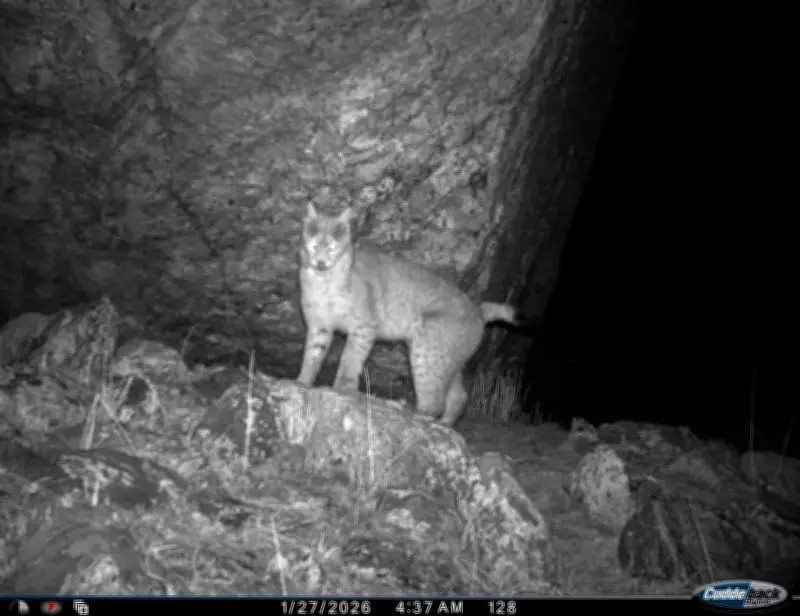
Eurasian Lynx Confirmed in Sikkim via Camera-Trap
WWF India announced that the Eurasian lynx (Lynx lynx) was photographed for the first time in Sikkim in January 2026. The image was captured by a camera-trap deployed at an elevation of 5,250 metres on the Tso Lhamo plateau in Mangan district. This represents only the second photographic record of the species in the entire Eastern Himalayan region.
The record was obtained as part of a long-term snow leopard and rangeland monitoring programme jointly led by the Forest and Environment Department, Sikkim and WWF-India. Although anecdotal reports of the Eurasian lynx had circulated in the region for years, this discovery provides the first confirmed photographic evidence of its presence in the state.
Significance for Eastern Himalayan Biodiversity
This finding follows the first-ever photographic record of the Eurasian lynx in Arunachal Pradesh in 2025, documented during a joint survey by WWF-India and the Department of Environment, Forest & Climate Change, Arunachal Pradesh. Together, the two records substantially advance understanding of the species’ distribution in the Eastern Himalayas, a region where it has been almost entirely undocumented.

“The photographic confirmation of the Eurasian lynx in the Tso Lhamo plateau is a proud moment for Sikkim. It highlights the ecological significance of our high-altitude rangelands and reinforces our commitment to protecting these fragile ecosystems. The Lachen Dzumsa’s cooperation in facilitating access to these remote areas has been important to this work,” said Udai Gurung, Chief Conservator of Forests (Wildlife), Forest and Environment Department, Sikkim.
Ecosystem and Conservation Pressures
The Eurasian lynx is a medium-sized wild cat distinguished by its characteristic ear tufts and short tail, and is well-adapted to cold, high-altitude environments. The Tso Lhamo plateau, a high-altitude cold desert ecosystem characterised by extreme climatic conditions and low human density, evidently supports a broader assemblage of trans-Himalayan wildlife than previously documented. The region nevertheless faces serious conservation pressures.
“Following our 2025 record in Arunachal Pradesh, the Sikkim record confirms that the Eurasian lynx has a broader presence in the Eastern Himalayas than was previously understood. What we are documenting at Tso Lhamo is not a single species occurrence, it is a high-altitude ecosystem of exceptional conservation value. Sustaining long-term, systematic monitoring across these landscapes is essential if we are to understand and protect what is here,” said Dr Rishi Kumar Sharma, Head, Himalayas Program, WWF-India.
Monitoring Programme and Future Outlook
The monitoring programme continues to generate data on the distribution and population status of snow leopards and associated species across Sikkim’s high-altitude landscapes, informing science-based conservation planning in one of the most remote and least-studied ecosystems in the Indian Himalaya.






