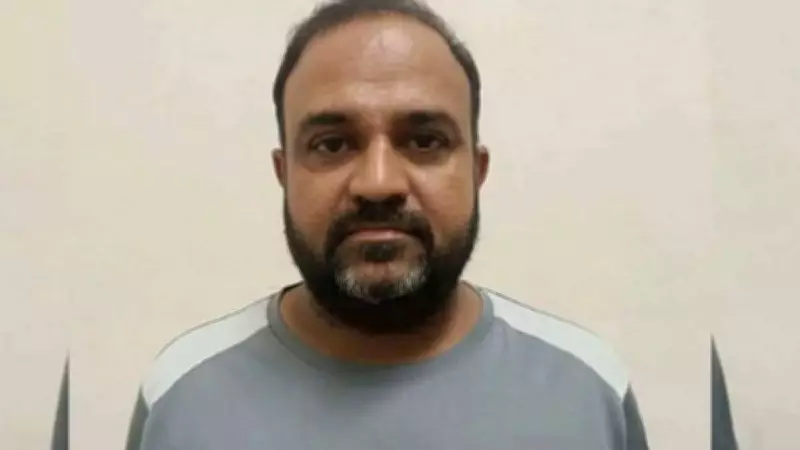
Rajasthan CID Nabs ISI Funding Agent in Maharashtra
The Rajasthan Criminal Investigation Department (CID) has arrested a key agent of Pakistan's Inter-Services Intelligence (ISI) from Maharashtra, exposing a clandestine funding network that funneled money to operatives for anti-India activities. The arrest, made on July 1, 2026, follows a months-long investigation into cross-border espionage and terror financing.
The accused, identified as Mohammad Salim, a resident of Malegaon in Nashik district, was apprehended from his residence. According to CID officials, Salim was the mastermind behind collecting and distributing funds from ISI handlers to sleeper cells in Rajasthan, Gujarat, and Maharashtra.
Network Uncovered Through Digital and Human Intelligence
The CID's Anti-Terrorism Squad (ATS) had been tracking Salim's movements and communications for over six months. The breakthrough came after the interrogation of two other ISI-linked suspects arrested earlier in Rajasthan. They revealed Salim's role as a conduit for hawala transactions and cryptocurrency transfers.

“Salim would receive instructions via encrypted messaging apps and handed over cash to operatives for subversive activities, including spreading communal discord and gathering sensitive information about military installations,” said a senior CID officer, speaking on condition of anonymity.
Recovery of Incriminating Material
During the raid, the CID seized ₹12 lakh in cash, multiple SIM cards, a laptop, and documents detailing transactions. Forensic analysis of the devices is underway to trace the full network. Preliminary findings suggest Salim had been active since 2022, handling over ₹50 lakh in funds.
The arrest has led to the identification of at least five other suspects, including a retired army officer and a madrasa teacher, who are being questioned. The CID has also alerted central agencies like the National Investigation Agency (NIA) to coordinate further action.
Modus Operandi: Hawala and Cryptocurrency
Investigators revealed that the ISI used a mix of traditional hawala channels and modern cryptocurrency to transfer money. Salim would convert cryptocurrency into cash through local exchangers, minimizing digital footprints. He then disbursed amounts ranging from ₹50,000 to ₹2 lakh to operatives in border districts of Rajasthan.
“This network was designed to be self-sustaining. Operatives were instructed to recruit more agents to expand the network without requiring constant external funding,” the officer added.
Political Reactions and Security Implications
The arrest has sparked political debate, with opposition parties demanding a thorough probe into the funding of anti-national activities. Rajasthan Home Minister said, “This is a major success for our police. We are committed to dismantling every ISI network operating in the state.”
Security experts warn that such funding networks pose a grave threat to national security. “The use of cryptocurrency makes it harder to track. Agencies need to upgrade their cyber forensics capabilities,” said a former ATS chief.
Ongoing Investigation and Future Steps
The CID has registered a case under the Unlawful Activities (Prevention) Act (UAPA) and relevant sections of the Indian Penal Code. Salim has been remanded to 14-day police custody. The agency is also working with the Financial Intelligence Unit (FIU) to freeze accounts linked to the network.
Further arrests are expected in the coming days as the CID expands its dragnet across states. The case highlights the persistent challenge of cross-border terror financing and the need for inter-state coordination among law enforcement agencies.