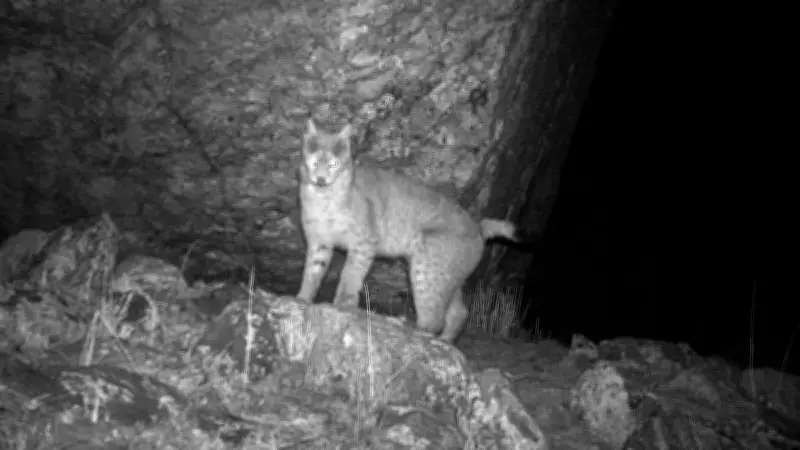
The Eurasian lynx has been photographed for the first time in Sikkim, marking a significant wildlife discovery in the Himalayan state. The forest department confirmed the sighting, which was captured by a camera trap set up in a high-altitude region.
First photographic evidence in Sikkim
The image was obtained in the remote Pangolakha Wildlife Sanctuary, located in East Sikkim, at an elevation of over 4,000 metres. According to the Sikkim Forest Department, this is the first confirmed photographic record of the Eurasian lynx (Lynx lynx) in the state. The species is classified as Least Concern on the IUCN Red List but is rarely sighted in the Indian Himalayas.
Characteristics and habitat
The Eurasian lynx is a medium-sized wild cat distinguished by its characteristic ear tufts and short tail. It is well-adapted to cold, high-altitude environments, with thick fur and large paws that aid in snow movement. The cat preys on small ungulates, hares, and rodents. Its presence in Sikkim indicates a healthy ecosystem in the region.

Forest officials noted that the camera trap was part of a routine monitoring exercise. The discovery highlights the biodiversity of the sanctuary, which also hosts snow leopards, red pandas, and Himalayan black bears.
Conservation implications
Wildlife experts say the finding underscores the need for continued conservation efforts in high-altitude habitats. The lynx is protected under Schedule I of the Wildlife Protection Act, 1972, giving it the highest level of legal protection in India. The forest department plans to expand camera trapping to better understand the lynx's range and population.
“This is an exciting record for Sikkim. The Eurasian lynx is elusive and rarely photographed in the Indian Himalayas. Our camera trap surveys will now focus on identifying more individuals and their movement patterns,” said a senior forest official.
Regional context
Previously, the Eurasian lynx had been reported in Ladakh, Himachal Pradesh, and Uttarakhand, but photographic evidence from Sikkim was lacking. This sighting fills a gap in the known distribution of the species in India. The state's forest department is collaborating with the Wildlife Institute of India for further studies.