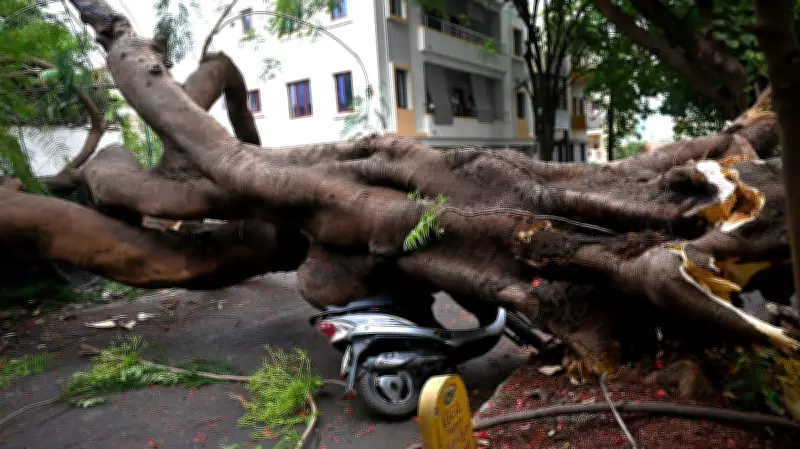
A recent study has highlighted that exotic tree species are the most susceptible to toppling during heavy rains in Bengaluru. The research, conducted by the Indian Institute of Science (IISc) in collaboration with the Bruhat Bengaluru Mahanagara Palike (BBMP), analyzed data from over 1,000 tree falls recorded between 2018 and 2022.
Key Findings of the Study
The study found that exotic species such as Rain Tree (Samanea saman), Copper Pod (Peltophorum pterocarpum), and Silver Oak (Grevillea robusta) accounted for nearly 60% of all tree falls. These trees, originally from other continents, have shallow root systems that make them prone to uprooting in wet soil conditions.
Native Trees More Resilient
In contrast, native species like Neem (Azadirachta indica), Banyan (Ficus benghalensis), and Pongamia (Millettia pinnata) showed greater resistance to storm damage. Their deep root systems and adaptability to local climate conditions provide better stability.

Implications for Urban Planning
The findings underscore the need for careful tree selection in urban landscaping. The study recommends prioritizing native species in future plantation drives to reduce the risk of tree falls. Additionally, regular maintenance and pruning of exotic trees can help mitigate hazards.
Safety Measures
Authorities are advised to conduct periodic health assessments of trees, especially exotic ones, and remove or stabilize those that pose a threat. Public awareness campaigns can also educate citizens about reporting vulnerable trees.
The study serves as a crucial guide for urban forestry management in Bengaluru, emphasizing the importance of biodiversity and resilience in the face of changing weather patterns.