

On any given school day today, learning is no longer confined to classrooms and textbooks. Across the world, educators are rethinking what it means for children to truly learn and grow. Increasingly, the conversation has shifted toward how schools can support not only academic achievement but also physical health, emotional well-being, and life skills. According to the World Health Organization (WHO), regular physical activity and more active classroom environments not only support children’s health and well-being but are also linked to improved cognitive, social, and motor skills, factors that collectively contribute to better academic outcomes. These findings have become particularly relevant at a time when concerns around screen time, stress, and sedentary habits among children continue to rise.
India’s Evolving Education Landscape
In India, this broader understanding of education is gradually shaping policy as well as practice. The National Education Policy 2020 places strong emphasis on experiential learning and identifies sports and physical education as integral to a child’s development. Parallel efforts by the Ministry of Youth Affairs and Sports, including initiatives like Khelo India, have sought to build a stronger foundation for sports at the school level. Together, these developments point to a growing recognition that skills such as teamwork, discipline, and resilience are as important as academic scores.
Role of Structured Platforms
Structured platforms have also played a key role in this shift. Organisations like the International Schools Sports Organization (ISSO) create opportunities for students to step beyond intra-school activities and experience competitive sports in a more organised environment. Participation in such events not only allows students to test their abilities but also opens pathways to national-level competitions conducted by bodies such as the School Games Federation of India. For many students, these experiences become defining moments that build confidence and a sense of purpose early in life.

The Gaudium School’s Achievement
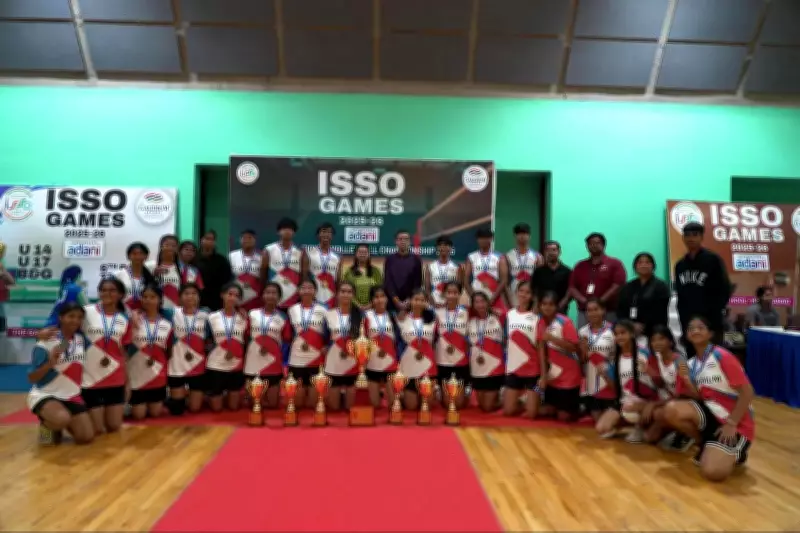
It is within this larger context that The Gaudium School in Kollur features in the 2025–26 ISSO rankings, where it has been placed No. 2 in India and No. 1 in Telangana. The recognition reflects the school’s engagement with structured sports alongside its academic programmes, rather than positioning sports as a separate or occasional activity.
Students from the school took part in a wide range of disciplines, including athletics, gymnastics, badminton, volleyball, chess, taekwondo, basketball, swimming, and fencing. Across these events, they secured a total of 23 gold, 13 silver, and 20 bronze medals. Beyond the numbers, such participation points to sustained involvement in training, preparation, and competition across different levels.
School’s Holistic Approach
Founded in 2015, The Gaudium School operates from a 27-acre campus in Kollur under the leadership of Founder and Director K. Kirthi Reddy. Over the years, the institution has developed an approach that attempts to combine academics with co-curricular and experiential learning in a structured manner.
A typical day at the school reflects this mix. Alongside classroom sessions, students spend time in sports training, practical lab work, and outdoor activities. These varied experiences are designed to keep learning dynamic and to encourage students to engage with concepts in different ways. Educational research increasingly supports such models, suggesting that exposure to multiple learning environments can improve retention, creativity, and problem-solving skills.
Residential Programme Benefits
The residential programme at the school adds another layer to this experience. Students from different regions live and learn together, which naturally brings opportunities for collaboration, shared routines, and the development of independence. Such environments often help students build interpersonal skills that are difficult to cultivate through academics alone.
With a parent community of over 4,000, the school continues to expand its academic and co-curricular offerings. Its presence in ISSO rankings reflects not just performance in competitions but also a broader alignment with the growing emphasis on integrating sports into everyday school life.

Conclusion
As schools continue to adapt to changing expectations, the idea of holistic education is becoming less of an aspiration and more of a necessity. The integration of academics, sports, and experiential learning is gradually redefining how success is measured in education—not only through exam results but also through the development of healthier, more confident, and well-rounded individuals.





