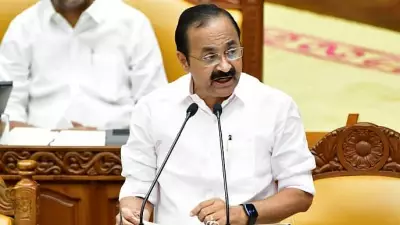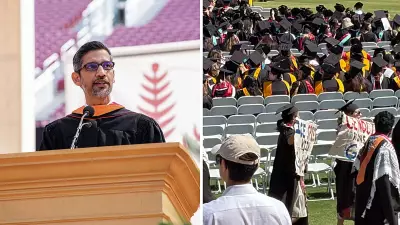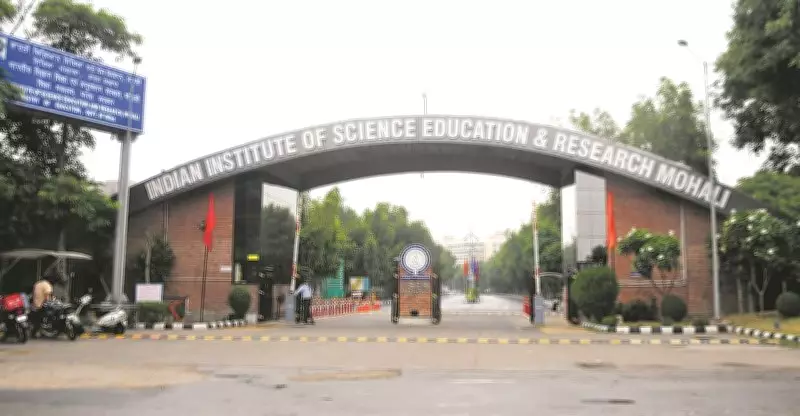
Fifteen years after former Prime Minister Dr Manmohan Singh envisioned world-class science institutions in Mohali, the Indian Institute of Science Education and Research (IISER) has emerged as a premier center for scientific research, innovation, and higher education in India. The institute celebrated this milestone at its 15th convocation, where the first Dr Manmohan Singh Awards for Academic Excellence and fellowships were presented to outstanding students by former Deputy Chairman of the Planning Commission Montek Singh Ahluwalia and Dr Singh's son-in-law Vijay Tankha. These awards, instituted by the Dr Manmohan Singh Trust, added emotional significance as the institute honored its achievements for the first time since the former Prime Minister's passing.
Research Powerhouse
IISER Mohali has become a research powerhouse, publishing over 500 research papers annually and generating more than 15,000 citations. Faculty secured 49 extramural projects worth nearly Rs 25 crore during the year. The institute's i-RISE incubator has supported over 50 startups, generated more than 20 patents, and facilitated Rs 9.6 crore in funding.
Sharing details with The Tribune, IISER Mohali Director Prof Anil K Tripathi said the institute's journey over the past 15 years reflects its transformation from a young science institution into a globally recognized research hub contributing to frontier science, innovation, entrepreneurship, and national missions.

At the convocation, 348 students received degrees, including 107 PhDs, underscoring IISER Mohali's growing contribution to India's scientific workforce.
Research Output and Breakthroughs
The institute's research output has expanded significantly. During the past year alone, faculty members and researchers published over 500 papers in leading international journals, generating more than 15,000 citations. Research from IISER Mohali appeared in prestigious journals such as Science, Nature Communications, Science Advances, Proceedings of the National Academy of Sciences (PNAS), Physical Review Letters, and The EMBO Journal.
Among notable breakthroughs, IISER scientists developed a sunlight-harvesting photoswitch capable of storing solar energy and releasing it on demand, AI- and satellite-based systems to monitor groundwater changes in Punjab and the Indo-Gangetic Plain, machine-learning models for forecasting extreme Himalayan weather events, and therapeutic nanobodies against snake venom, dengue, coronavirus, and drug-resistant bacterial infections. Researchers also reported advances in ageing biology, plant sciences, medicinal chemistry, quantum physics, gravity, astrophysics, and climate science.
The institute's Department of Biological Sciences is currently ranked third in India in the Nature Index, reflecting its growing global reputation. Faculty members continued to earn national and international recognition, securing prestigious fellowships and awards from leading scientific bodies. IISER-Mohali researchers represented India at global scientific platforms, while several faculty members assumed editorial responsibilities in reputed international journals.
Funding and Collaborations
Prof Tripathi said IISER-Mohali's growing stature was also reflected in its ability to attract competitive funding. During the year, faculty secured 49 extramural research grants worth nearly Rs 25 crore. The institute has increasingly focused on translating research into societal and industrial applications. It undertook consultancy and contract research projects with industry and academic partners and signed an MoU with Semi-Conductor Laboratory, Mohali, to contribute to India's semiconductor mission. International collaborations were also expanded through partnerships with universities in Australia and elsewhere.
Innovation and Entrepreneurship
Innovation and entrepreneurship have become another key pillar of growth. IISER-Mohali's Technology Business Incubator, i-RISE, has incubated more than 50 startups across biotechnology, healthcare, diagnostics, agritech, artificial intelligence, sustainability, and deep-tech sectors. These ventures have generated over 20 patents and received nearly Rs 9.6 crore in support under various startup funding programmes.

Beyond research, the institute has built a strong outreach ecosystem through science festivals, teacher-training programmes, school visits, and public engagement initiatives across Punjab, Haryana, and Himachal Pradesh. Thousands of students have participated in programmes such as Tattva, Open Day, National Space Day celebrations, and the Nobel and Abel Prize Lecture Series.
IISER-Mohali graduates today occupy positions in leading global institutions, including MIT, Oxford, Yale, Cornell, IISc, and Max Planck institutes.
Future Plans
Looking ahead, the institute plans to deepen its engagement with national priorities in semiconductors, climate resilience, artificial intelligence, biotechnology, translational research, and innovation-led entrepreneurship. As it moves towards its third decade, IISER-Mohali is seeking to build on the vision laid down by Dr Manmohan Singh by combining cutting-edge science with solutions to real-world challenges.