

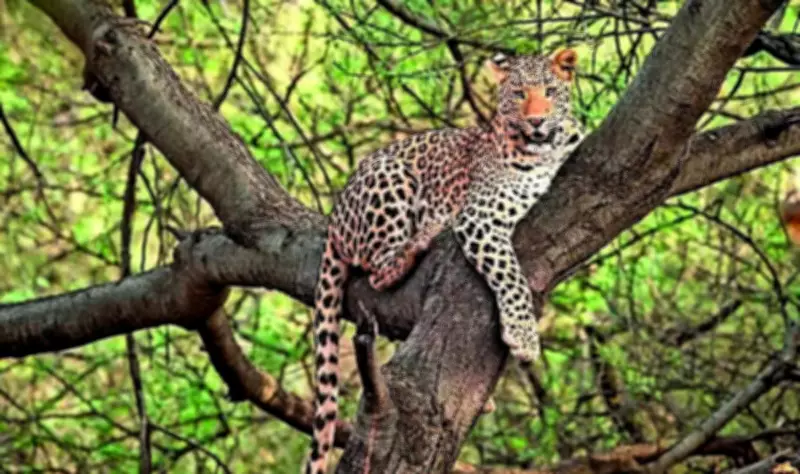
The forest department's Wildlife Estimation 2026 has recorded 62 leopards across Jaipur's major protected forest areas, underscoring the expanding urban wildlife network around the city and the growing need for corridor protection and scientific monitoring. The assessment, conducted through waterhole monitoring and field surveys, revealed significant predator and herbivore populations in the region.
Nahargarh Wildlife Sanctuary Leads in Leopard Presence
Nahargarh Wildlife Sanctuary reported the highest leopard presence with 27 leopards. The sanctuary also recorded 27 jackals, 12 desert foxes, 160 nilgai, 183 langurs, and 26 sambhar, indicating a healthy predator and herbivore population. This diverse ecosystem supports a robust food chain within the sanctuary.
Jhalana Leopard Reserve Findings
Jhalana Leopard Reserve recorded 17 leopards, including 12 males, four females, and one unidentified leopard. The reserve also reported 22 hyenas, 81 nilgai, and 17 sambhar. Only three chital were recorded during the exercise, while no langurs were observed. Forest officials noted that the actual leopard population in Jhalana is likely higher, as not all animals visit water points during the survey. Additionally, three cubs of a leopardess were not recorded during the estimation.

Amagarh Leopard Reserve Observations
Amagarh Leopard Reserve recorded 10 leopards, including six males, one cub, and three unidentified leopards. The reserve also reported 21 hyenas, eight desert foxes, 40 nilgai, 12 sambhar, 29 langurs, and 19 porcupines. Officials confirmed that the presence of a cub indicates active breeding within the reserve.
Nahargarh Biological Park
Nahargarh Biological Park recorded eight leopards along with significant populations of hyenas, jackals, and herbivores. The park contributes to the overall predator network in the region.
Wildlife experts emphasized, "The report highlights that Jaipur's forests now support a significant predator network spread across interconnected urban landscapes. The increasing presence of leopards and hyenas near expanding urban areas has made corridor protection, scientific monitoring, and prey base management increasingly important." This study provides critical data for future conservation strategies in the region.






