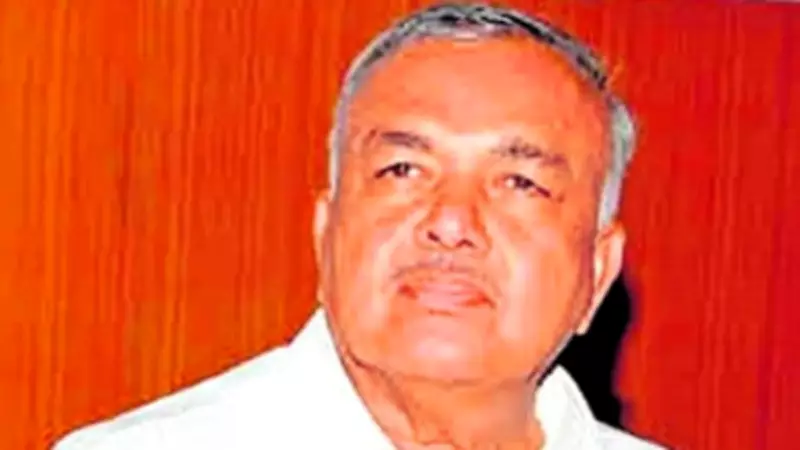
The Karnataka government is exploring cloud seeding as a potential solution to address the rainfall deficit in the state. Water Resources Minister Ramalinga Reddy, after reviewing the water availability in Mysuru, Mandya, and Chamarajanagar districts, announced that a meeting of experts will be convened to discuss the feasibility of cloud seeding.
Water scarcity concerns
The state has been facing a significant rainfall deficit, raising concerns about water availability for agriculture and drinking purposes. The districts of Mysuru, Mandya, and Chamarajanagar have been particularly affected, prompting the government to consider artificial rainmaking techniques.
Cloud seeding involves dispersing substances into the air to encourage precipitation. This method has been used in various parts of the world to combat drought and increase water supply.

Expert consultation planned
Minister Reddy stated that the government will seek input from meteorological experts and scientists to evaluate the effectiveness and environmental impact of cloud seeding in Karnataka. The meeting will also discuss the logistics and costs associated with the operation.
According to Reddy, “We are facing a challenging situation due to the rainfall deficit. Cloud seeding could be a viable option, but we need expert advice before proceeding.”
Previous attempts and outcomes
Karnataka had previously experimented with cloud seeding in 2017 and 2019, with mixed results. The state government had allocated funds for the project, but the success rate was limited due to unfavorable atmospheric conditions.
Officials are now reviewing data from those attempts to determine if improved technology and better planning could yield better results.
Impact on agriculture and reservoirs
The rainfall deficit has led to reduced water levels in major reservoirs, affecting irrigation for crops such as paddy, sugarcane, and maize. Farmers in the Cauvery basin have expressed concerns over the potential impact on their livelihoods.
The government is also considering alternative measures, including water rationing and promoting water-efficient crops, to mitigate the crisis.
Minister Reddy emphasized that the cloud seeding proposal is part of a broader strategy to manage water resources effectively. He said, “We are exploring all options to ensure adequate water supply for the state.”
The meeting of experts is expected to be held within the next two weeks, and a decision on implementing cloud seeding will be taken based on their recommendations.