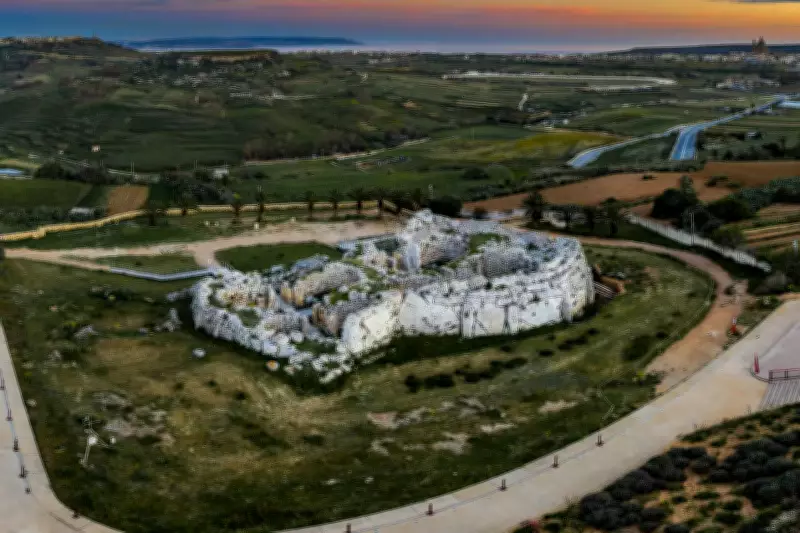
When envisioning the oldest places of worship, one might picture the colossal stone monuments of Ancient Egypt or the brick ziggurats of Mesopotamia. It is easy to assume that such masterpieces required great empires with abundant warriors and resources. However, history reveals a different story. The earliest surviving freestanding temple structures are not found on grand continents but on the sunlit islands of the Mediterranean Sea. Before the first blocks of the Great Pyramid of Giza were laid, an isolated community on Malta was lifting and erecting massive limestone blocks into unique temples.
The Megalithic Temples of Malta: A Global Phenomenon
These structures, recognized as the earliest surviving architectural works, belong to the Megalithic Temples of Malta. Unlike other archaeological remains such as post holes or foundation layers, these temples are complete buildings with entrances, interior rooms, and detailed construction techniques. According to the UNESCO World Heritage Convention, these complexes represent a unique architectural phenomenon built by a highly organized Neolithic society during a boom period starting around 3600 BCE. They predate Stonehenge by centuries.
Although debates exist about their chronological sequence due to successive construction waves, they all stand as the oldest freestanding temples on Earth.

1. Ġgantija Temples
Located on the serene island of Gozo, the Ġgantija complex is considered the oldest standing freestanding temple in the world, built around 3600 BCE. Its name means "giant's tower," reflecting the belief of later communities that only giants could move the huge limestone blocks forming its walls.
2. Skorba Temples
On the northern edge of Malta, Skorba is less visually intact but a treasure trove for historians. It preserves early structural evidence of the temple-building era, showing that artistic and structural styles evolved over centuries of experimentation.
3. Ta' Ħaġrat Temples
These temples, near the village of Mġarr, feature one of the best-preserved doorways, resembling a miniature Stonehenge. The design demonstrates mastery of balance and space, using globigerina limestone blocks transported manually with stone rollers.
4. Ħaġar Qim
This magnificent temple sits atop a hill with spectacular ocean views. It contains some of the heaviest stones used in construction, weighing over twenty tons each.
5. Temples of Mnajdra
A short distance from Ħaġar Qim, Mnajdra is uniquely oriented toward the sun. During spring and fall equinoxes, morning sunlight shines directly into the main entrance, illuminating an altar. This indicates that the builders were not only brilliant architects but also excellent astronomers.
Unraveling the Mystery of the Ancient Builders
How an isolated island community achieved advanced stone building technology remains a captivating enigma. A report by Heritage Malta, titled "Roofing the Past - The Mnajdra Graffito," suggests that the islanders were more developed than their Stone Age contemporaries. Scratches on temple walls indicate that builders had plans for room layouts before starting physical work. Their clover leaf-like designs allowed even distribution of roof weight to stone walls, making them resistant to the extreme Mediterranean heat.
These sites compel us to reconsider our view of the ancient world. Grand structures do not necessarily require an empire or countless workers. Sometimes, an isolated island society with a common goal, a limestone quarry, and sufficient time can rewrite history.