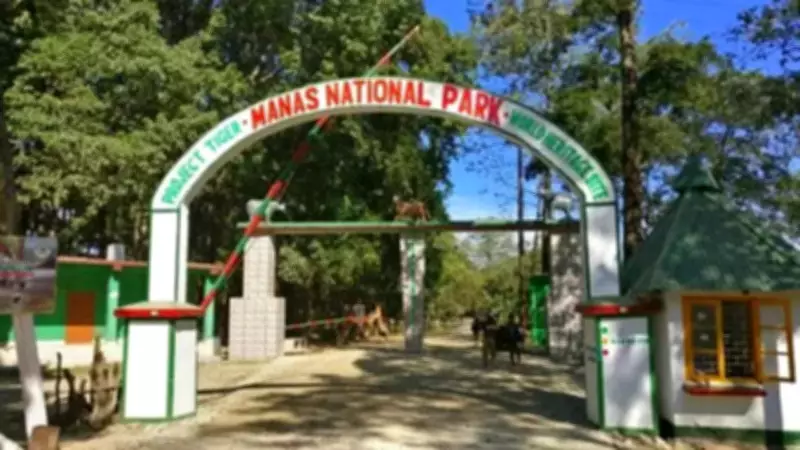
The forest department has launched a pioneering grassland nursery initiative at Manas National Park to address the rapid decline of grasslands in the UNESCO World Heritage site. This marks the first such effort in the park, aimed at reversing the ecological transformation of grasslands into woodlands.
Nursery Establishment and Species Cultivation
Officials confirmed that the nursery was established in October last year within the park's Bansbari range. It spans one hectare and comprises 192 beds, where approximately 15 to 20 grass species are being cultivated. Yuvraj Singh Digra, a park official, highlighted key species such as Setaria italica, Eulalia, Kangaroo grass, Chrysopogon polyphyllus, and Imperata cylindrica. He explained that the nursery produces sufficient seeds for scattering in targeted restoration areas. "We have planted enough seeds and rhizomes of these species, and once they grow, we will collect the seeds again so that the restoration cycle can continue," Digra added.
Fodder and Ecosystem Benefits
Pranjal Talukdar, Bansbari range officer, noted that the nursery will focus on native grass species and also provide fodder for herbivores, supporting the park's wildlife. The initiative comes in response to concerns that Manas has lost an estimated 50 to 60 percent of its grasslands over the past three decades.

Expert Perspectives on Grassland Degradation
Jaydev Mandal, assistant professor at Madhab Chandra College in Barpeta and a researcher on grassland conservation at Manas, pointed to climate change as a major factor in the spread of invasive species and grassland degradation. He criticized the tendency to prioritize tree cover over grassland preservation. "The forest department needs to practice grassland management. Through this, the ecosystem can be restored and native species can regenerate," Mandal added.