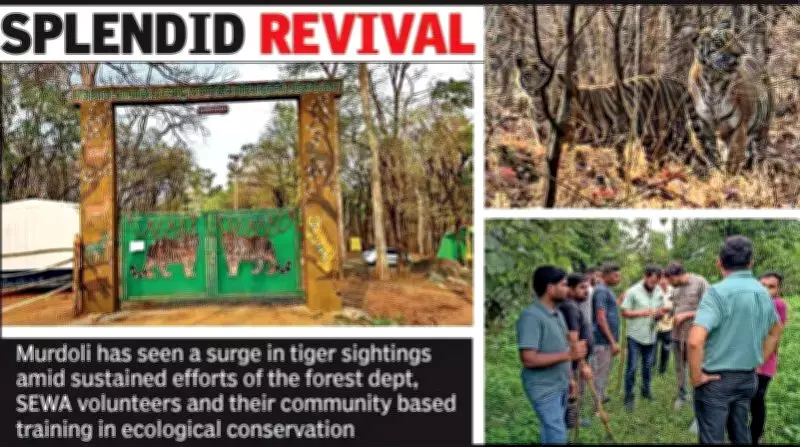
Chandrapur: Murdoli, once a fragile and conflict-prone forest stretch in the Navegaon-Nagzira Tiger Reserve (NNTR) corridor a decade ago, has now transformed into a thriving tiger habitat and an emerging safari destination. This remarkable change reflects years of dedicated conservation work by forest officials, local communities, and the NGO SEWA.
Turning Point: Reopening of Murdoli Safari Gate
The reopening of the Murdoli safari gate on May 1, after nearly two decades of conflict and crises, marked a significant turning point. This move aimed to boost eco-tourism and ease visitor pressure on other entry points. It signals the ecological recovery of a landscape once threatened by habitat degradation, water scarcity, forest fires, and rising human-wildlife conflict. Murdoli forest was previously part of the territorial forest but was recently handed over to the wildlife wing after its merger into the tiger reserve's buffer zone.
Unique Safari Experience
NNTR field director Piyusha Jagtap highlighted that Murdoli is the only safari operational in the reserve's buffer zone, offering visitors a diverse wildlife experience. "Murdoli is unique for its blend of open meadows, hilly terrain, and safari tracks running alongside the scenic Chulbandh dam. Its most prominent attraction is the mid-safari halt at the dam's bank, offering tourists a rare combination of wildlife and landscape experience," she said. The Murdoli safari circuit will remain open throughout the year, including during the monsoon.

Gradual Transformation Through Conservation Efforts
This transformation has been gradual and hard-earned. For nearly 10 years, forest department staff and SEWA volunteers have worked on continuous monitoring, protection, and awareness efforts. Their work ranged from camera trap surveillance and wildlife tracking to village outreach and conflict mitigation. "We have seen Murdoli evolve from a vulnerable forest patch into a stable tiger habitat. This success belongs to everyone who stayed committed on the ground for years," said SEWA president Sawan Bahekar.
Ecological Revival and Tiger Movement
The ecological revival is closely linked to tiger movement and breeding patterns. Initially, male tiger T-7 from the Navegaon side frequented the area but was later replaced by the dominant T-9 from the Nagzira core. The arrival of tigress T-14 proved decisive, as her successful breeding laid the foundation for Murdoli's revival. Over time, she contributed nearly a dozen cubs to the landscape, significantly strengthening the regional tiger population.
Key Contributors to Conservation
During this crucial conservation phase, dedicated efforts were undertaken under field director Piyusha Jagtap; deputy director Pritamsingh Kodape; DCF Jitendra Ramgaokar and DCF Pramod Panchbhai, with strong support from local RFOs, who played a key role in safeguarding and managing the Murdoli landscape. "Murdoli's recovery shows what consistent protection, scientific monitoring, and community cooperation can achieve," Kodape told TOI.