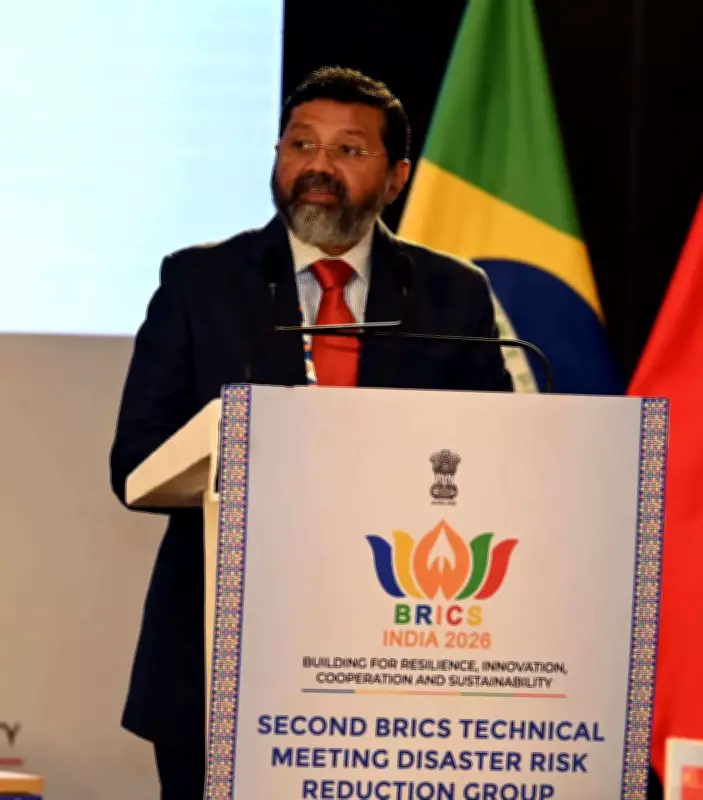
Puri: Krishna S Vatsa, a member and head of the National Disaster Management Authority (NDMA), on Thursday highlighted Odisha as a model for disaster management, citing sustained investments in preparedness, early warning systems, community participation, evacuation planning, and resilient recovery. Speaking at the Second BRICS Technical Meeting of Disaster Risk Reduction Group in Puri, Vatsa noted that Odisha's progress since the 1999 Super Cyclone and subsequent cyclone responses offers valuable lessons for India and the global community.
Call for Global Cooperation on Disaster Resilience
Vatsa, who also chairs the meeting, urged a unified global push on disaster resilience. He emphasized that disaster risk management must evolve into a "global public good" and stressed that BRICS cooperation is critical to protecting vulnerable nations and strengthening collective preparedness.
Changing Nature of Disaster Risks
“Disaster risks are changing rapidly as climate change increases the frequency, intensity, and unpredictability of hazards. A heatwave may trigger power failures and water shortages. Intense rainfall may lead to urban flooding, infrastructure disruptions, and public health emergencies. Droughts can affect food security, livelihoods, and migration patterns,” Vatsa said. He added that countries are increasingly facing cascading and compounding risks rather than isolated hazards.

To address these challenges, Vatsa called for major investments, technological innovation, scientific capability, strong institutions, and close cooperation among governments, communities, academia, the private sector, and civil society. “No single institution can manage these risks alone,” he said, noting that BRICS countries, despite different geographies and development pathways, have made significant efforts to strengthen disaster risk reduction systems.
Measurable Outcomes and Thematic Areas
Vatsa stated that these efforts have delivered measurable outcomes across BRICS nations, including reduced hazard-related mortality, improved preparedness, and protection of lives and livelihoods. However, he stressed that progress must be sustained and expanded.
He highlighted five thematic areas identified by the working group as key opportunities for cooperation: early warning systems, resilient infrastructure, disaster risk financing, nature-based solutions, and science, technology, and innovation. These areas have the potential to improve resilience outcomes for millions.
Knowledge Sharing and Innovation
Vatsa said the BRICS platform can help countries pool experiences, innovations, and practices, learn from one another, and adapt successful approaches to local contexts. To deepen cooperation, he called for more investment in knowledge systems, including mechanisms to document good practices, evaluate what works, share lessons, and build communities of practice. He also urged the creation of knowledge platforms linking policymakers, practitioners, scientists, financial institutions, local governments, and communities, alongside innovation ecosystems that support experimentation and accelerate adoption of proven solutions.
“The challenge before us is not a shortage of ideas. It is the challenge of bringing proven solutions to scale and ensuring that they reach the communities that need them the most,” Vatsa concluded.