The National Green Tribunal (NGT) has taken serious note of the damage and destruction to the Sai Upwan city forest in Ghaziabad, issuing notices to the central and Uttar Pradesh governments, among others. The tribunal has directed the respondents to file a reply within four weeks and fixed July 2 as the next date of hearing.
The principal bench of the NGT, comprising Chairperson Prakash Shrivastava and expert member Dr Afroz Ahmad, issued notices to the Ministry of Environment, Forest and Climate Change (MOEFCC), the Uttar Pradesh government, the Ghaziabad Development Authority (GDA), the Ghaziabad Nagar Nigam, the district magistrate, the Central Pollution Control Board, the Uttar Pradesh Pollution Control Board, and the divisional forest officer.
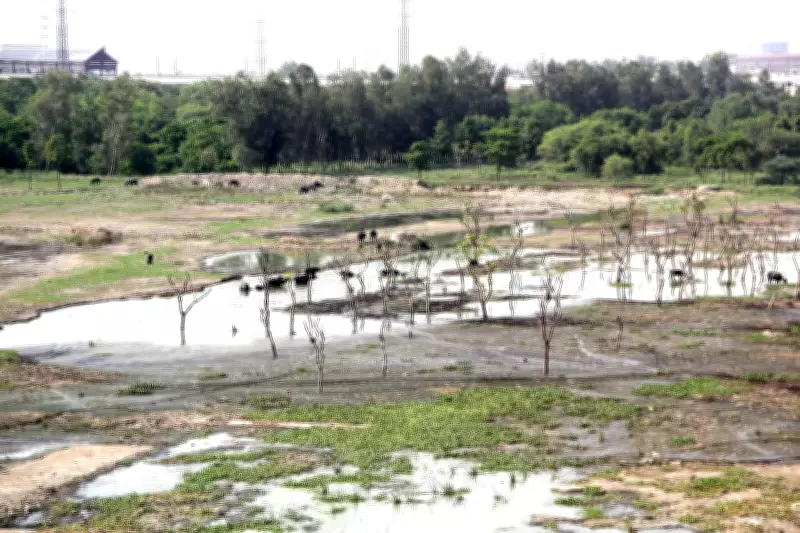
The bench was hearing a petition filed by former municipal corporator Rajendra Tyagi on May 15. The petition was filed in compliance with an earlier NGT order passed on March 19 this year. The matter concerns the discharge of sewage and wastewater into the city forest, which has led to the destruction of over 70,000 trees.

During the hearing, the bench noted that while the applicant had raised several issues regarding the 200-acre Sai Upwan area—including solid waste, accumulation of legacy waste, illegal construction activities, earth filling reclaiming part of the forest area, cattle grazing, submergence with sewage and wastewater, and other non-forest activities—the counsel for the applicant submitted that he was confining the original application only to the issue of solid and liquid waste management. Accordingly, the counsel was permitted to delete the averments relating to other issues and amend the prayer clause within one week.
Complying with this direction, a fresh application was filed seeking the green tribunal's intervention to direct authorities to check construction work in the city forest and ensure its conservation as a green area. Advocate Akash Vashishtha, counsel for the petitioner, argued that Sai Upwan is not merely an open area but a forest earmarked in the Ghaziabad Master Plan 2031, mandated to be used only as a city forest. He stated that converting this designated forest into non-forest activities—such as constructing roads and other structures, earth filling, and reclamation—is leading to the loss of a rich tree cover comprising several thousand trees. Additionally, it is preventing the afforestation of at least 100 acres that could otherwise help in preventing, controlling, and abating air pollution, depriving millions of residents of fresh, clean air.
The petitioner sought to fix accountability with the respondents and requested directions to ensure that no earth filling, reclamation, concretisation, or construction is allowed inside the Sai Upwan city forest. The plea also demanded the demolition of existing structures and the implementation of massive, dense afforestation using native species and fruit trees, along with strict regulation, management, and conservation of the city forest.
Vashishtha further noted that the GDA had attempted to shift its responsibility to the Ghaziabad civic body for the upkeep of the city forest. He stated that both parties have been made respondents, and the petitioner now awaits specific directions from the tribunal to ensure that the authorities allow the 'lungs' of one of the most polluted cities in the country to function properly.