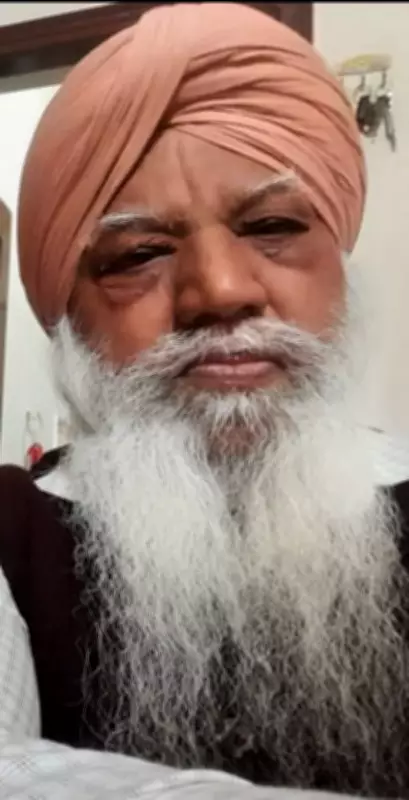
Dr Harbans Singh Dhiman, a distinguished Punjabi scholar, linguist, and author, passed away at a Patiala hospital on Tuesday night, a week after a serious car accident. He was 73 years old.
Accident and Aftermath
According to his close friend and writer Darshan Singh Asht, Dr Dhiman and his wife were involved in a road accident near Samana last week. Their car overturned on the highway, leaving both critically injured. They were rushed to a hospital in Patiala, where Dr Dhiman succumbed to his injuries after a week of treatment. His wife remains hospitalized in stable condition.
Academic Contributions
Born on January 13, 1953, six years after the Partition, Dr Dhiman dedicated his life to building literary and linguistic bridges across borders. Based in the Patiala and Rajpura academic hubs, he was widely respected for his authoritative research into Punjabi phonology, morphology, and script history. His seminal textbooks, including Punjabi Bhasha ate Vyakaran (Punjabi Language and Grammar) and Viharak Punjabi Bhasha ate Gurmukhi Lipi, are staples of higher education and are part of the curriculum at leading institutions like Delhi University.

Promoting Cross-Border Literary Exchange
Beyond his work as an educator, Dr Dhiman played a pivotal role in promoting literary exchange between East and West Punjab. He specialized in transliterating contemporary Pakistani Punjabi literature from the Shahmukhi script into Gurmukhi, allowing Indian readers access to shared regional narratives. Notable projects include the critical evaluation text Pakistani Punjabi Sahit: Nikas te Vikas and the Gurmukhi script conversion of Fauzia Rafique’s acclaimed novel Skeena, published via Patiala's Sangam Publications. He also edited Panj Pakistani Punjabi Novelet, a highly regarded compilation of West Punjabi fiction.
Legacy and Condolences
Darshan Singh Asht remembers him as a meticulous grammarian who dedicated his career to refining and standardizing contemporary Gurmukhi instruction. Expressing condolences, local writers termed his passing an "irreparable loss to Punjabi language planning." His demise has triggered a wave of grief among authors, language activists, and academics associated with Punjabi University and regional literary circles.